

Table Culture – The Art of Stylishly Staging Moments of Indulgence
A lovingly set table is more than just an arrangement of dishes and cutlery—it is the stage for culinary experiences, an expression of hospitality, and a tribute to the art of shared enjoyment. At Style & Taste, we celebrate table culture as a subtle form of staging that lends every occasion a touch of elegance and a personal note. Discover with us the elements that make a table unforgettable and be inspired to design your own moments of indulgence with style and sophistication.
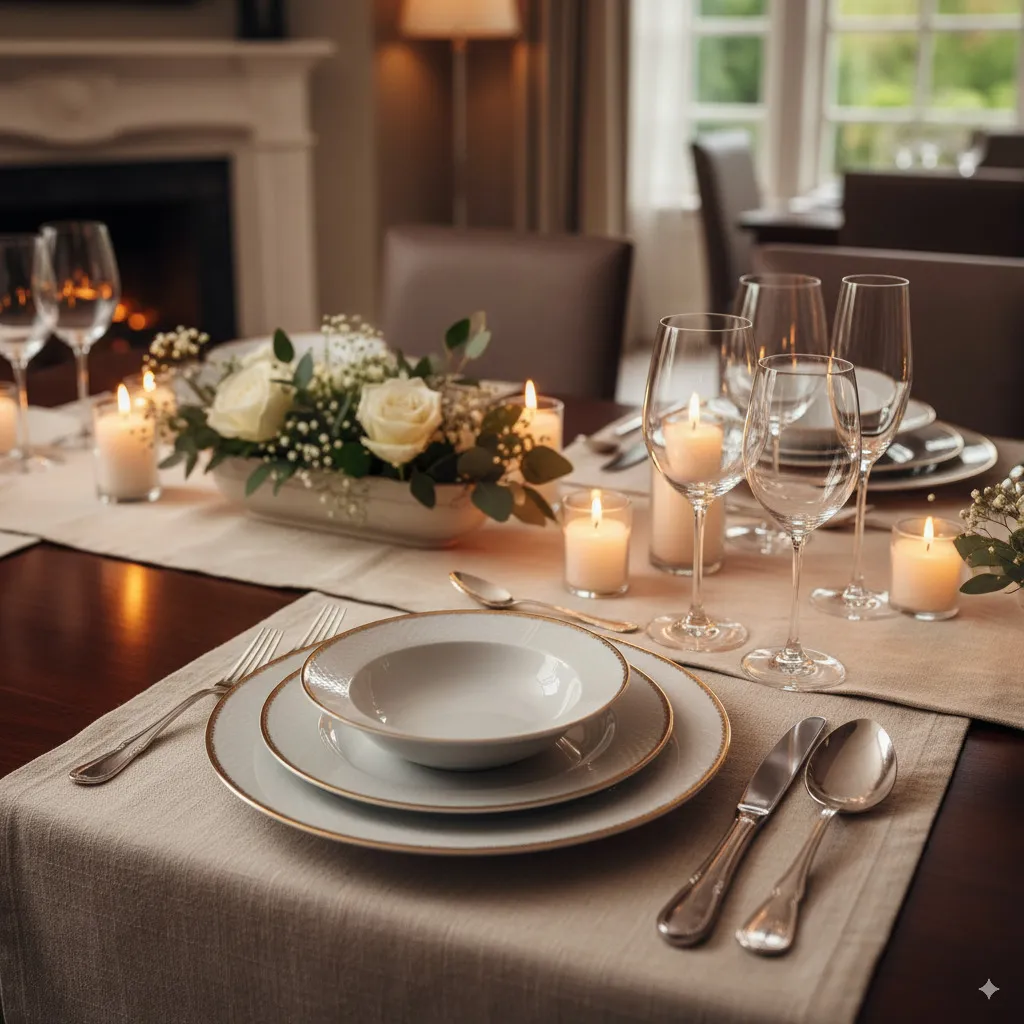
From an intimate dinner to a festive soiree—a stylishly set table is the most beautiful invitation to linger and enjoy.
[TOC]
The Philosophy of Table Culture: More Than Just Etiquette
Section titled “The Philosophy of Table Culture: More Than Just Etiquette”A cultivated table culture is an expression of appreciation—towards your guests, the food, and the moment itself. It enriches the dining experience by:
- Creating an inviting atmosphere: A beautifully set table signals care and invites well-being.
- Appealing to the senses: Not only is the sense of taste indulged, but the eye also enjoys the aesthetics of the table.
- Promoting conversation and community: A pleasant environment facilitates conversation and strengthens togetherness.
- Honoring the occasion: Whether a festive holiday or a relaxed weekend meal, the table setting can underscore the significance of the moment.
- Reflecting personal style: Your choice of dinnerware, decoration, and arrangement is a mirror of your individual aesthetic.
Elements of a Stylish Table – Curated by Style & Taste
Section titled “Elements of a Stylish Table – Curated by Style & Taste”1. The Foundation: Dinnerware, Cutlery & Glassware – Harmony in Form and Function
Section titled “1. The Foundation: Dinnerware, Cutlery & Glassware – Harmony in Form and Function”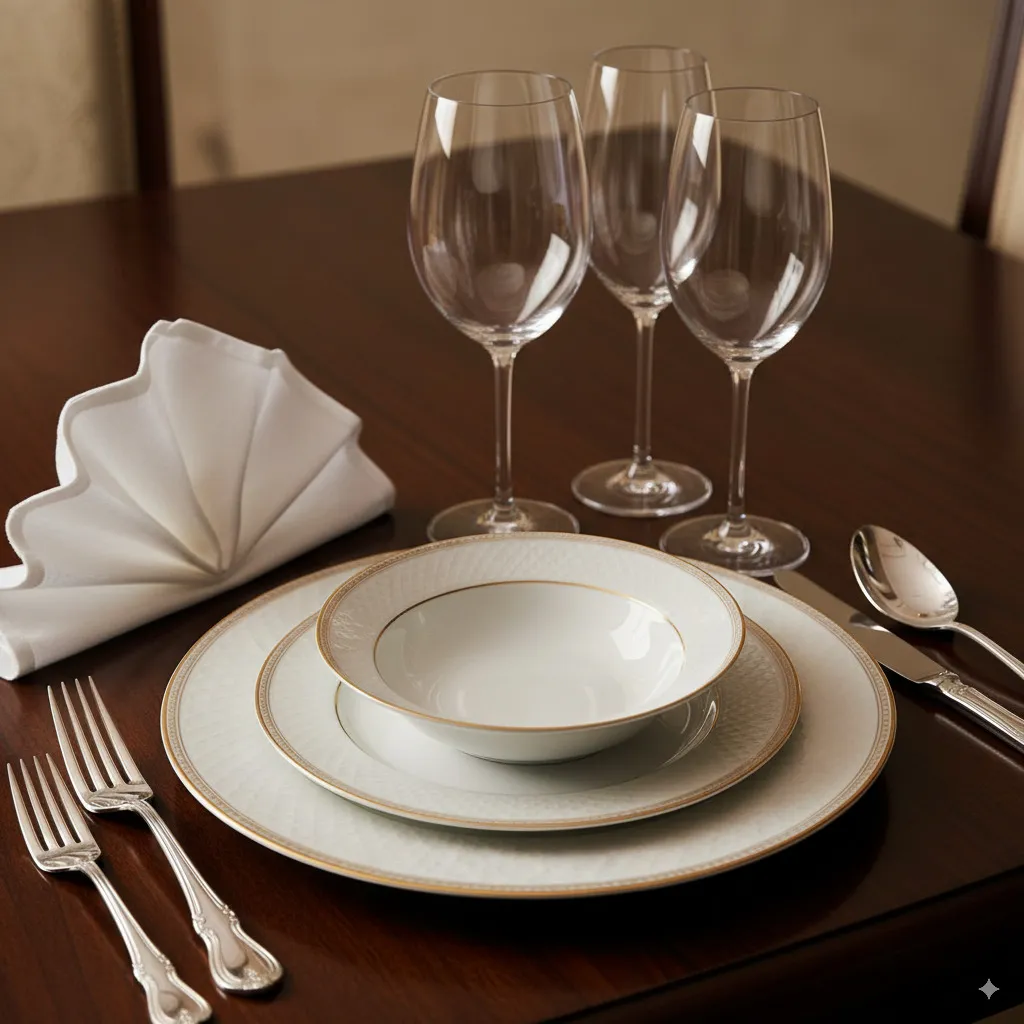
The dinnerware forms the canvas, the cutlery the tools, and the glasses the vessels for enjoyment. Their selection and arrangement are crucial for the overall picture.
The Choice of Dinnerware:
- Material & Style: Porcelain (classic-elegant), stoneware (rustic-charming), ceramic (artisanal-individual). Choose a style that matches your interior and the occasion.
- Shape & Color: Round plates are timeless, while square or organic shapes set modern accents. White is versatile, while colored or patterned dinnerware can add personality.
- The Ensemble: Consider whether you prefer a complete service or want to harmoniously mix and match different pieces.
The Elegance of Cutlery:
- Material: Stainless steel (easy to care for and modern), silver or silver-plated (classic and noble, requires care).
- Design: From minimalist-modern to ornate-decorated. Pay attention to a good feel and balance.
- The Correct Arrangement: Forks to the left of the plate (except for an oyster fork), knives (blade facing the plate) and soup spoons to the right. Dessert cutlery above the plate.
The Brilliance of Glassware:
- Function & Form: For every wine (red, white, sparkling) and every beverage (water, aperitif, digestif), there is a suitable glass that optimally enhances the aromas.
- Quality: Crystal glass or high-quality lead crystal for special brilliance and sound.
- Arrangement: Water glass to the right above the knife, wine glasses to the right of it or slightly offset behind.
Style & Taste Tip: Invest in a high-quality basic set of white dinnerware, good cutlery, and elegant universal wine glasses. This can be versatilely combined and supplemented with special pieces.
2. Textile Sophistication: Table Linens – The Foundation for Elegance
Section titled “2. Textile Sophistication: Table Linens – The Foundation for Elegance”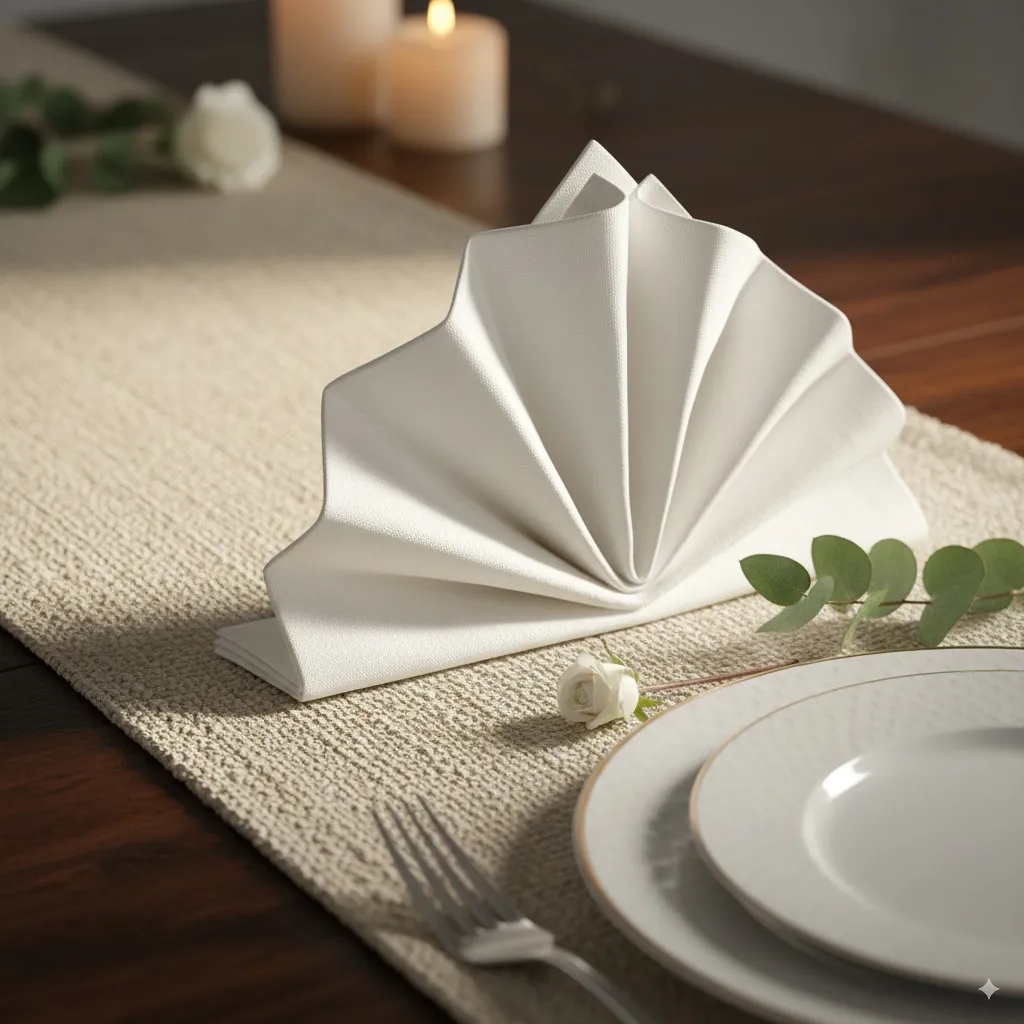
Table linens lend the table softness, texture, and a note of cultivated elegance. It is the stage on which the culinary drama unfolds.
The Choice of Table Linens:
- Tablecloths:
- Material: Linen (natural, noble, wrinkles charmingly), cotton (damask for festivity, more robust qualities for everyday use), mixed fabrics (easier to care for).
- Color & Pattern: White or cream are timeless classics. Colored or subtly patterned tablecloths can set accents and influence the mood.
- Size: The tablecloth should hang about 20-30 cm (8-12 inches) over all sides.
- Table Runners & Placemats:
- A stylish alternative to a full tablecloth, especially on beautiful wooden tables.
- Can set accents, define areas, or serve as a base for the centerpiece.
- Cloth Napkins:
- A must for an elegant table. Made of linen or cotton, matching the tablecloth or as a deliberate contrast.
- Folding Techniques: From simple-classic to artful-decorative. Napkin rings can add extra accents.
Style & Taste Tip: Ironed linen tablecloths exude a special elegance. For a more casual look, linen can also show its natural wrinkled texture.
3. Floral Poetry & Candlelight – The Art of the Centerpiece and Lighting Mood
Section titled “3. Floral Poetry & Candlelight – The Art of the Centerpiece and Lighting Mood”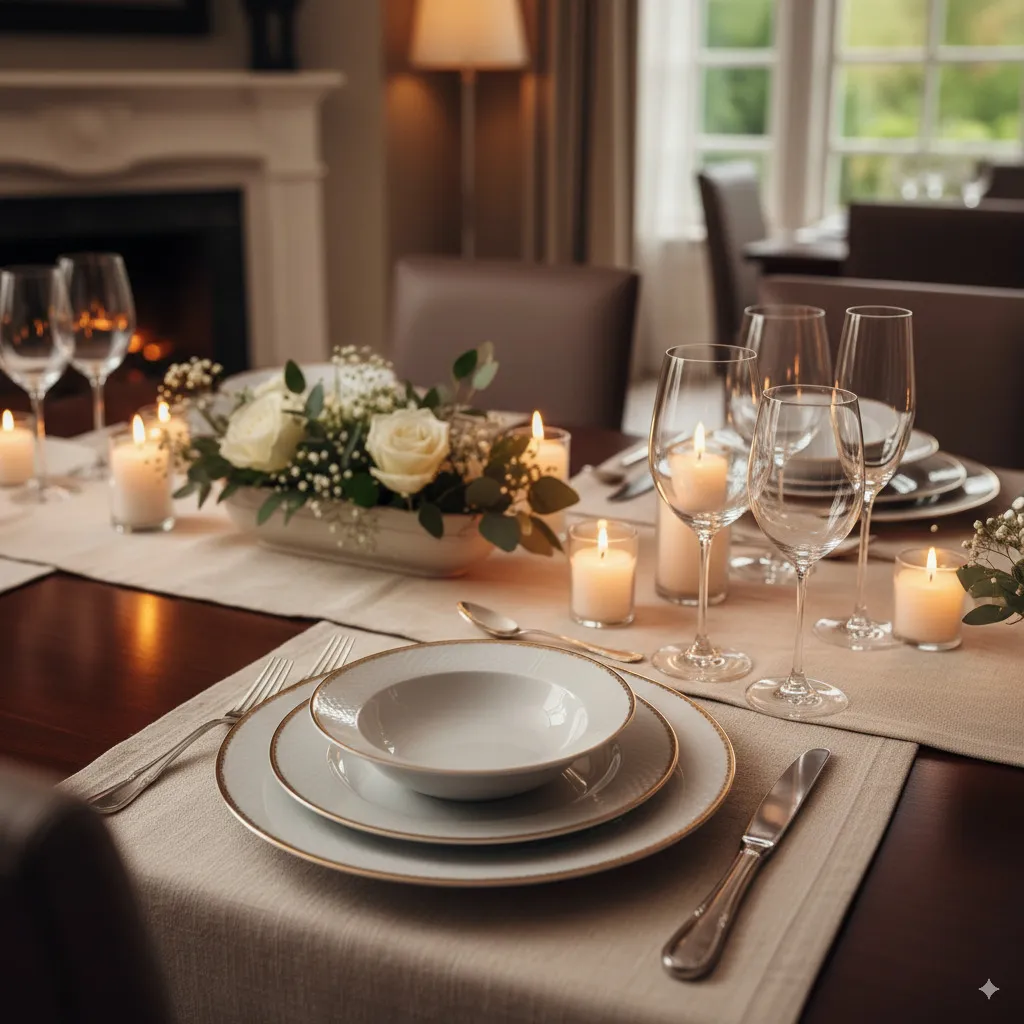
Flowers and candlelight are the soul of any festive table. They bring life, color, fragrance, and a magical atmosphere to the room.
The Perfect Centerpiece:
- Floral Arrangements:
- Consider the Height: The arrangement should not be so high that it obstructs the view and conversations of guests sitting opposite each other.
- Seasonality & Style: Choose flowers of the season that match the occasion and the style of your table. From opulent bouquets to single, artfully arranged blooms.
- Fragrance: Make sure the scent of the flowers is not too dominant and harmonizes with the food.
- Candlelight – Magic & Warmth:
- Types: Taper candles in elegant holders, pillar candles, tea lights in decorative holders.
- Placement: Distribute them to create an even, warm illumination without being glaring.
- Safety: Always ensure a stable base and keep flammable materials away.
- Alternative Centerpieces: Arrangements of fruits, branches, decorative objects, or a combination of different elements can also be appealing.
Style & Taste Tip: A low, elongated floral arrangement is often better for long tables, while round tables benefit from a central, more compact bouquet.
4. Personal Touches – The Signature of Your Hospitality
Section titled “4. Personal Touches – The Signature of Your Hospitality”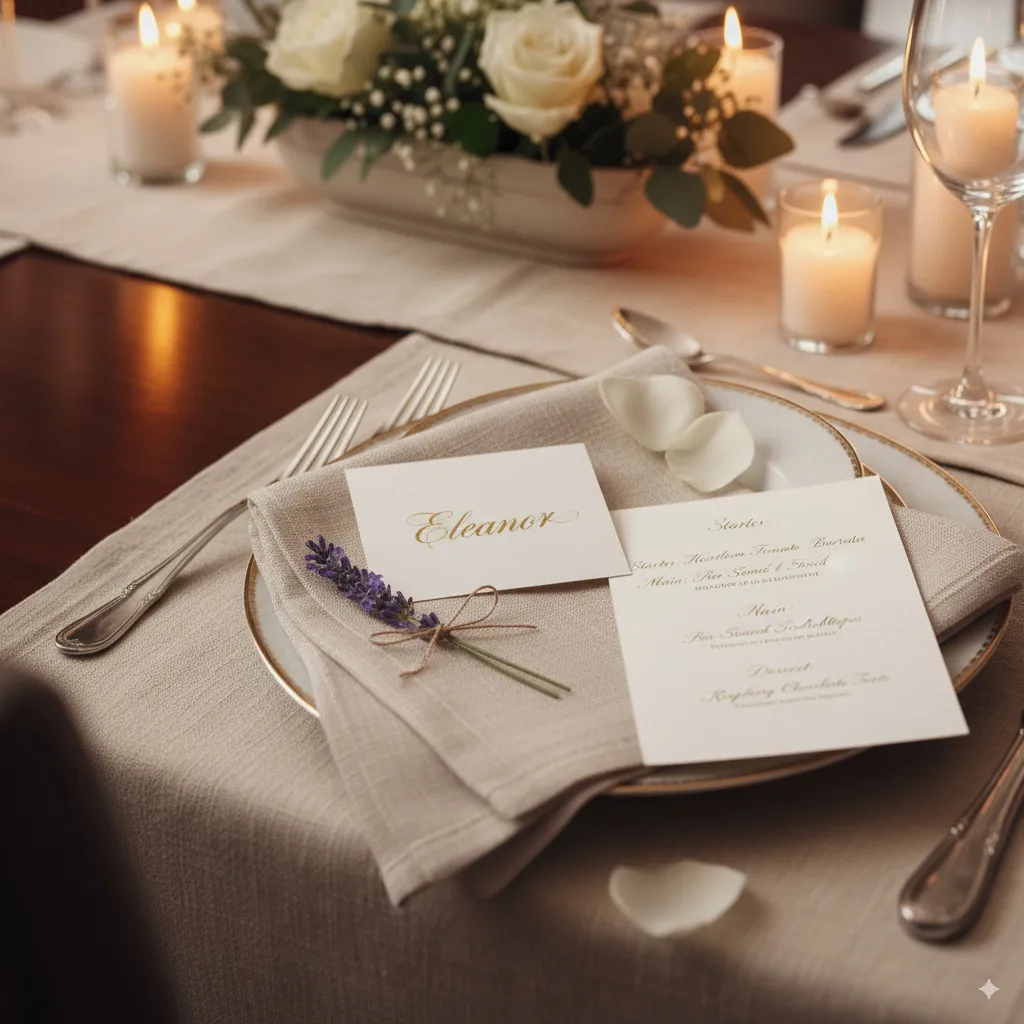
It is often the small, thoughtful details that make a set table unforgettable and show your guests how much you appreciate their presence.
Ideas for a Personal Touch:
- Place Cards: Handwritten or stylishly printed, they not only assign a seat but are also a personal gesture of welcome.
- Menu Cards: Elegantly inform about the sequence of courses and can be designed to match the decoration.
- Small Guest Gifts (Favors): A small token of appreciation at each guest’s place (e.g., a homemade chutney, a praline, a seed packet).
- Themed or Seasonal Decoration: Subtle elements that pick up the theme of the evening or the season (e.g., shells for a maritime dinner, small pine branches for Christmas).
- Individual Napkin Rings or Cutlery Ribbons: Small details with a big impact.
Style & Taste Tip: Authenticity is key. Choose personal touches that truly suit you and the occasion, rather than appearing artificial or overdone.
Basic Rules of Table Setting – A Small Etiquette Guide for a Stylish Table (Optional)
Section titled “Basic Rules of Table Setting – A Small Etiquette Guide for a Stylish Table (Optional)”The basic setting for a simple menu includes: charger plate (optional), main course plate, napkin (left or on the plate), fork to the left, knife to the right (blade facing the plate), water glass to the right above the knife.
For multiple courses, cutlery is used from the outside in (e.g., appetizer fork on the outside, main course fork on the inside). Soup spoon on the far right. Dessert cutlery above the plate. Wine glasses are arranged from right to left (or from largest to smallest) according to the wine sequence.
Ensure enough space for each guest (approx. 60-70 cm / 24-28 inches wide). The cutlery should be about 1-2 cm (0.5-1 inch) from the edge of the table.