

The Complete Masterclass: A Detailed Analysis of All Courses from Gasthof Krone Waldenbuch
A menu is more than a list of dishes; it is a promise, a philosophy, and an insight into the soul of a kitchen. The menu of Gasthof Krone Waldenbuch under Chef Erik Metzger is a masterpiece of restraint and precision. It does not reveal its secrets but invites interpretation.
This analysis is not a recipe book. It is a culinary reconstruction, an attempt to decipher the techniques, science, and dedication required to create dishes at this level. This is the complete collection, a tribute to the craftsmanship hidden within Michelin-star gastronomy.
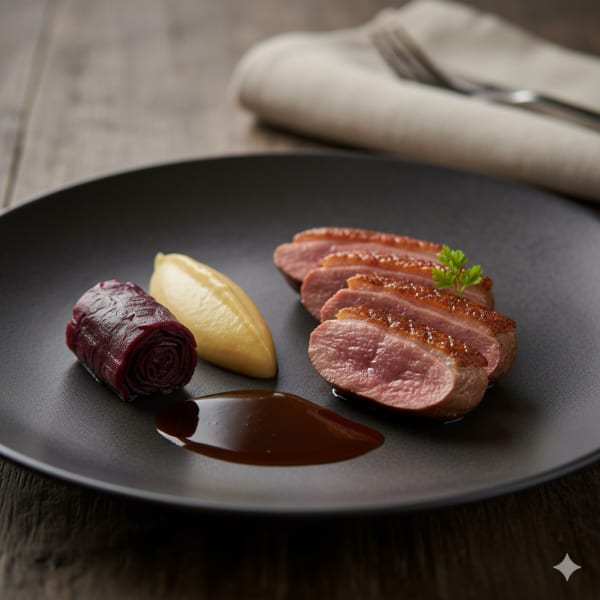
From ingredient to plate – a journey into the depths of haute cuisine, inspired by Chef Erik Metzger.
Philosophical Framework
Section titled “Philosophical Framework”Final Note – The Unspoken Masterpiece
Section titled “Final Note – The Unspoken Masterpiece”Chef Erik Metzger doesn’t write recipes. He writes poems in butter, vinegar, and flame. This reconstruction is not an attempt to steal his secrets; it is an act of reverence. We do not cook like him. We do not know his hands. But we can learn to see the world as he does: — A beetroot is not a vegetable, but a jewel of earth and time. — A piece of duck is not meat, but a story of season and slaughter. — A burnt sugar crust is not a topping, but a silence between the notes of a symphony.
To experience Gasthof Krone is to understand that true cuisine is not based on instructions. It is based on attention. And this – this meticulous, loving, precise interpretation – is the closest we can come to listening.
Starters
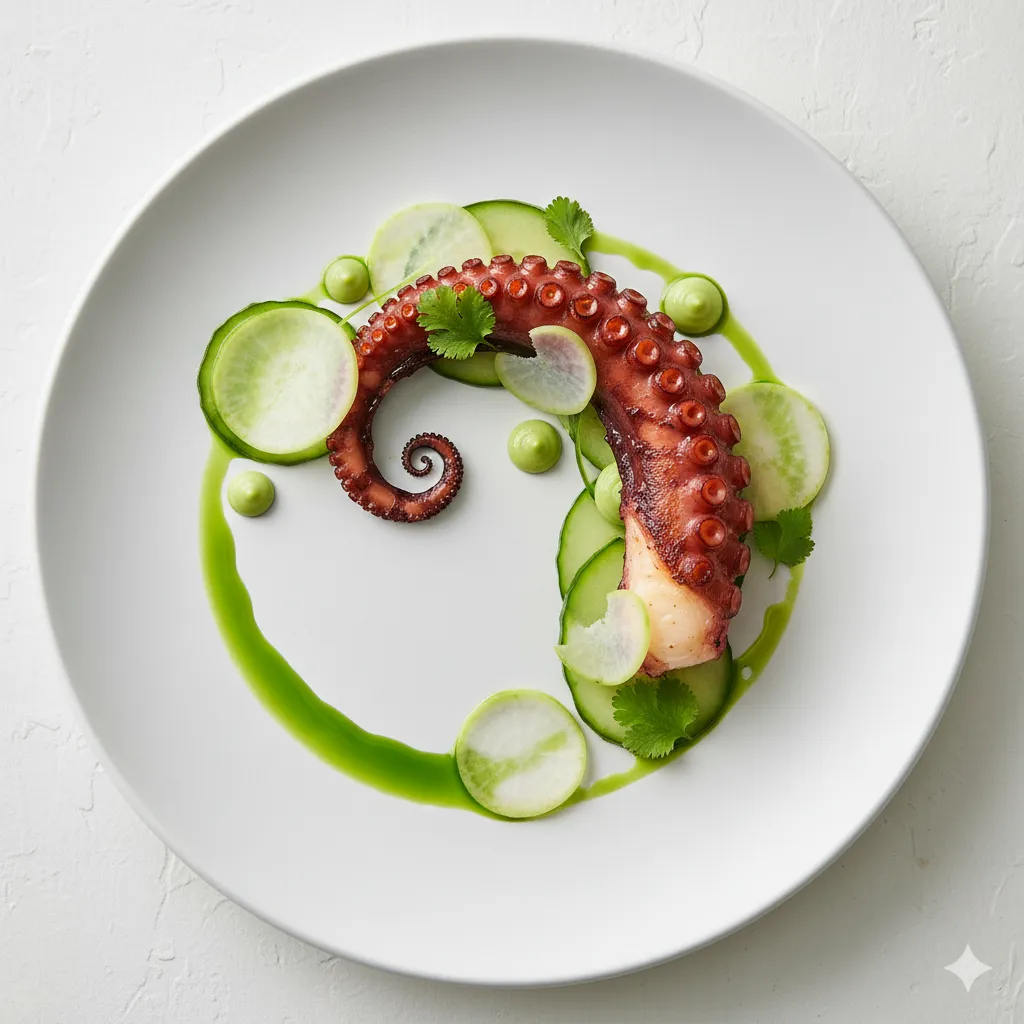
Section titled “Starters”Octopus | Wasabi | Cucumber | Cilantro | Kohlrabi
Section titled “Octopus | Wasabi | Cucumber | Cilantro | Kohlrabi”A dish that bridges oceanic depth and invigorating freshness. It is a play of textures: tender, creamy, crisp, and silky.
Michelin-Star Quality Ingredient List
Section titled “Michelin-Star Quality Ingredient List”- Octopus: 1 high-quality Galician octopus tentacle
- Wasabi: Freshly grated wasabi root, crème fraîche (40% fat), lime juice
- Cucumber: 1 salad cucumber
- Cilantro: Fresh cilantro leaves and stems, high-quality grapeseed oil
- Kohlrabi: 1 small, tender kohlrabi
- Spices: Sea salt, white pepper, bay leaf, lemon
Detailed Cooking Instructions
Section titled “Detailed Cooking Instructions”-
The Octopus (Tenderness through Precision)
- WHEN: 1 day in advance.
- HOW: The octopus tentacle is cooked sous-vide at exactly 77°C for 5 hours in a bag with olive oil and a bay leaf. It is then shocked in an ice bath. Just before serving, the suckers are lightly caramelized with a torch.
- WHY: Sous-vide cooks the octopus absolutely evenly, transforming tough collagen into tender gelatin without drying out the meat. The torching creates roasted aromas (Maillard reaction) and an exciting texture.
-
The Components (An Orchestra of Freshness)
- WHEN: Just before plating.
- HOW:
- Wasabi Cream: Freshly grated wasabi is stirred with crème fraîche, salt, and a splash of lime juice to create a mildly spicy, creamy emulsion.
- Cucumber Two Ways: Part of the cucumber is shaved into long, thin ribbons. The core is juiced, the juice is lightly gelled and formed into small pearls.
- Cilantro Oil: Cilantro stems are briefly blanched, shocked in ice water, dried, and blended with grapeseed oil to create a vibrant green, aromatic oil.
- Kohlrabi: The kohlrabi is sliced paper-thin on a mandoline and placed in ice water to make it crisp and slightly wavy.
- WHY: Each component has a clear role: the wasabi cream provides a creamy heat, the cucumber ribbons offer freshness, the cucumber pearls a surprising texture, the oil a deep herbal aroma, and the kohlrabi a sweet, earthy crunch.
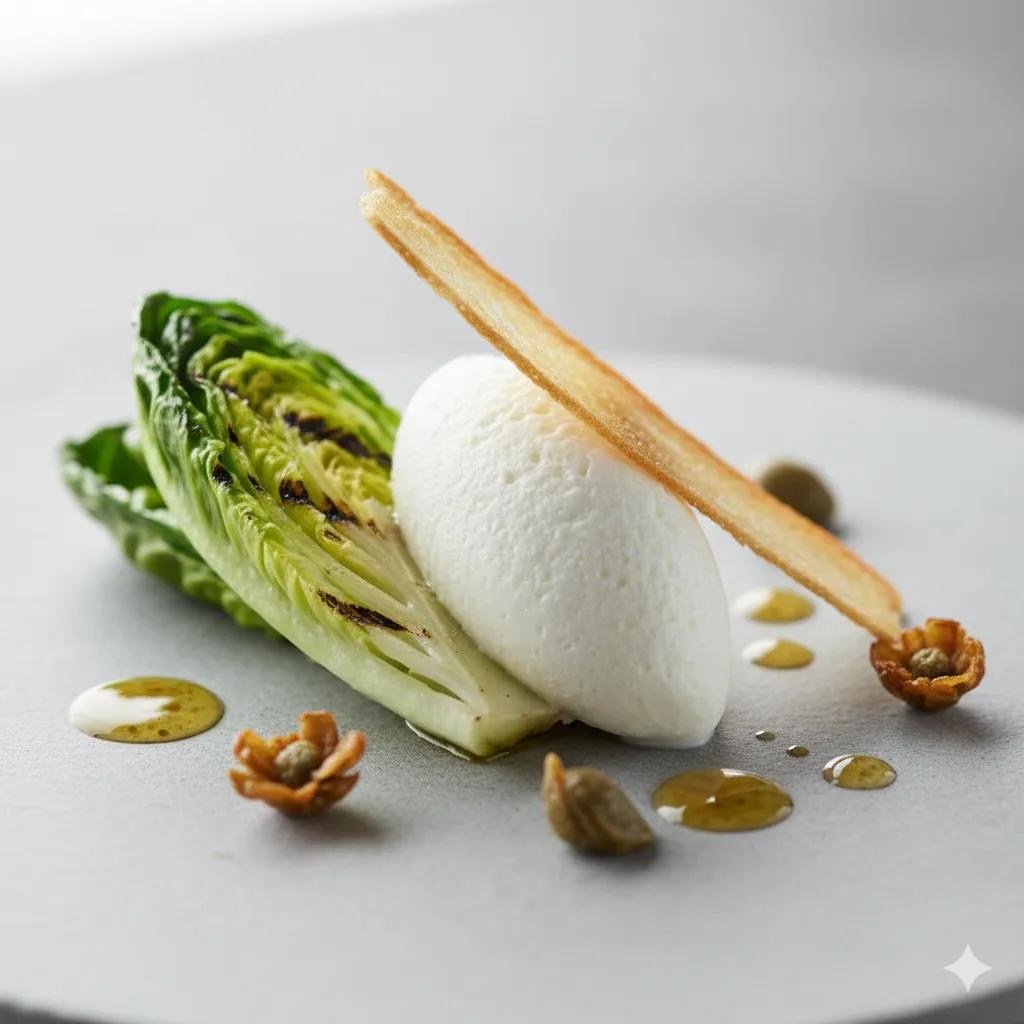
Goat Cheese | Romaine | Capers | Brioche
Section titled “Goat Cheese | Romaine | Capers | Brioche”A deconstruction of a classic, where each component is elevated to its purest and most elegant form to create a new, exciting harmony.
Michelin-Star Quality Ingredient List
Section titled “Michelin-Star Quality Ingredient List”- Goat Cheese: 200g mild, creamy Chèvre frais (fresh goat cheese)
- Romaine Lettuce: 2-3 of the innermost, smallest hearts of romaine lettuce
- Capers: 1 tbsp small salt-packed capers from Pantelleria
- Brioche: 2 slices of homemade brioche
- Aromatics: Clarified butter, cream, lemon zest, white pepper, thyme
Detailed Cooking Instructions
Section titled “Detailed Cooking Instructions”-
The Goat Cheese Espuma (Airy Elegance)
- WHEN: The base is prepared in advance, but it is foamed à la minute.
- HOW: The fresh goat cheese is blended until smooth with a splash of cream, a pinch of salt, white pepper, and the finest lemon zest. The mixture is poured into a cream siphon, charged with two N2O capsules, and chilled.
- WHY: A siphon creates an incomparably light, airy, yet stable mousse (espuma) that melts on the tongue. The cold preserves the delicate aroma of the cheese.
-
The Components (A Dialogue of Textures)
- WHEN: The lettuce, capers, and brioche are finalized just before plating.
- HOW:
- Grilled Romaine: The lettuce hearts are halved. A cast-iron skillet is heated to an extremely high temperature. The cut surface of the lettuce is pressed into the dry, hot pan for only 15 seconds to create deep char marks. The rest of the lettuce remains raw, cool, and crisp.
- Bloomed Capers: The salt-packed capers are rinsed and then thoroughly dried on a cloth for several hours. They are fried for a few seconds in 180°C oil, which causes them to burst open (“bloom”) and become extremely crispy.
- Brioche Paper: The brioche is sliced paper-thin (almost transparent) on a meat slicer. The slices are brushed with clarified thyme butter and baked between two silicone mats in the oven at 160°C until golden and crisp.
- WHY: The dish thrives on precise contrasts: the airy, cold espuma meets the warm, charred, yet crisp lettuce. The intensely salty, shattering caper blossoms stand against the fine, buttery crispness of the brioche paper. Each texture is a clear, distinct statement.
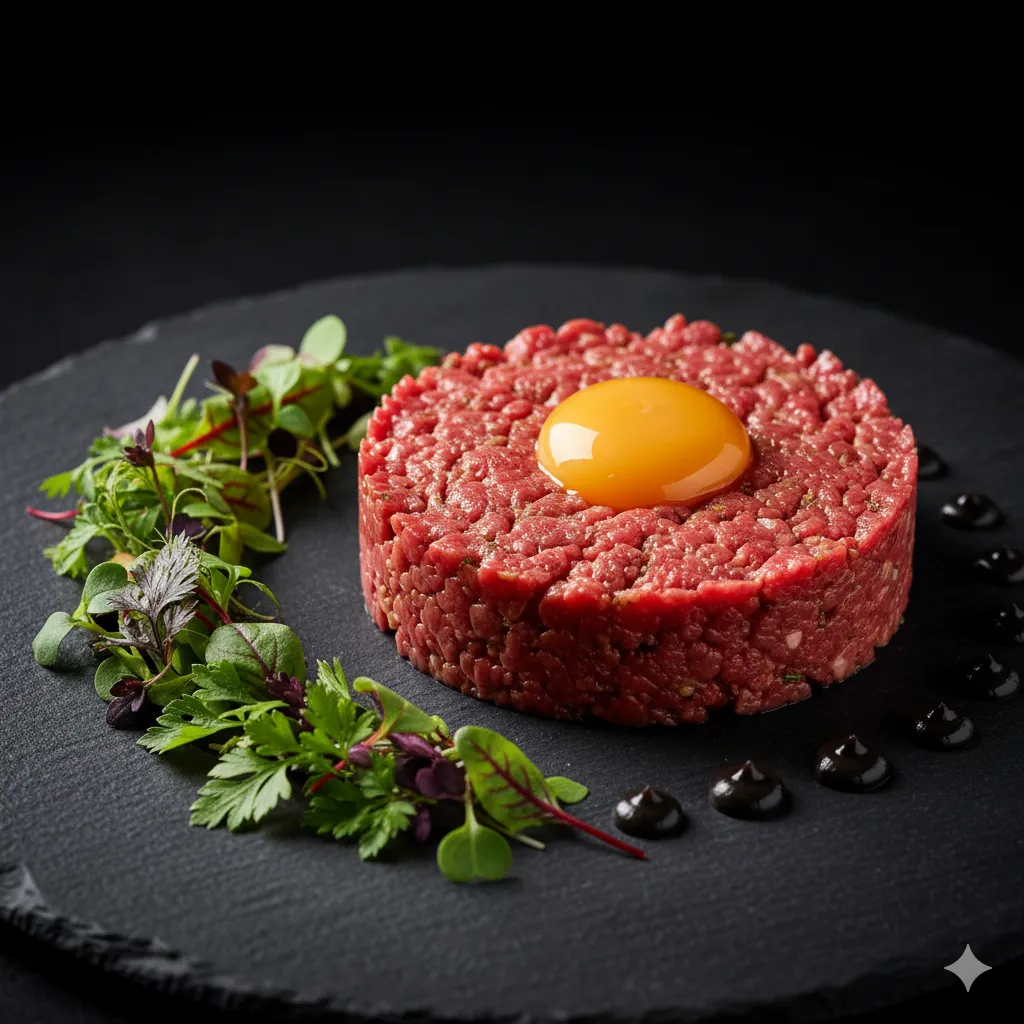
Beef Tartare | Confit Yolk | Truffle Mayonnaise | Wild Herb Salad
Section titled “Beef Tartare | Confit Yolk | Truffle Mayonnaise | Wild Herb Salad”A dish of pure product quality. Every component serves only to highlight the excellence of the hand-cut beef.
Michelin-Star Quality Ingredient List
Section titled “Michelin-Star Quality Ingredient List”- Beef Tartare: Center-cut beef tenderloin (aged at least 21 days)
- Egg Yolk: Organic egg yolk
- Truffle Mayonnaise: Egg yolk, Dijon mustard, the best Piedmont truffle oil, grapeseed oil, white balsamic vinegar
- Wild Herb Salad: A curated mix of at least 10 different wild herbs (e.g., wood sorrel, chickweed, yarrow)
Detailed Cooking Instructions
Section titled “Detailed Cooking Instructions”-
The Tartare & Yolk (Craftsmanship and Precision)
- HOW:
- Tartare: The tenderloin is hand-cut with an extremely sharp knife, first into thin slices, then into strips, and finally into tiny, uniform dice (brunoise). It is dressed only with olive oil, fleur de sel, and finely chopped chives.
- Confit Yolk: The yolk is carefully separated from the white and cooked sous-vide in oil at 64°C for 45 minutes.
- WHY: Hand-cutting preserves the texture of the meat, unlike a grinder which destroys the fibers. The confit yolk has a creamy, almost jam-like consistency and enrobes the tartare with a rich sauce when broken.
- HOW:
-
The Mayonnaise & Herbs (Luxury and Freshness)
- HOW: The truffle mayonnaise is freshly whipped. The wild herb salad is dressed with a light vinaigrette at the very last moment.
- WHY: A homemade mayonnaise with real truffle oil offers unparalleled aromatic depth. The complex wild herb salad provides the necessary freshness and peppery, acidic notes to balance the richness.
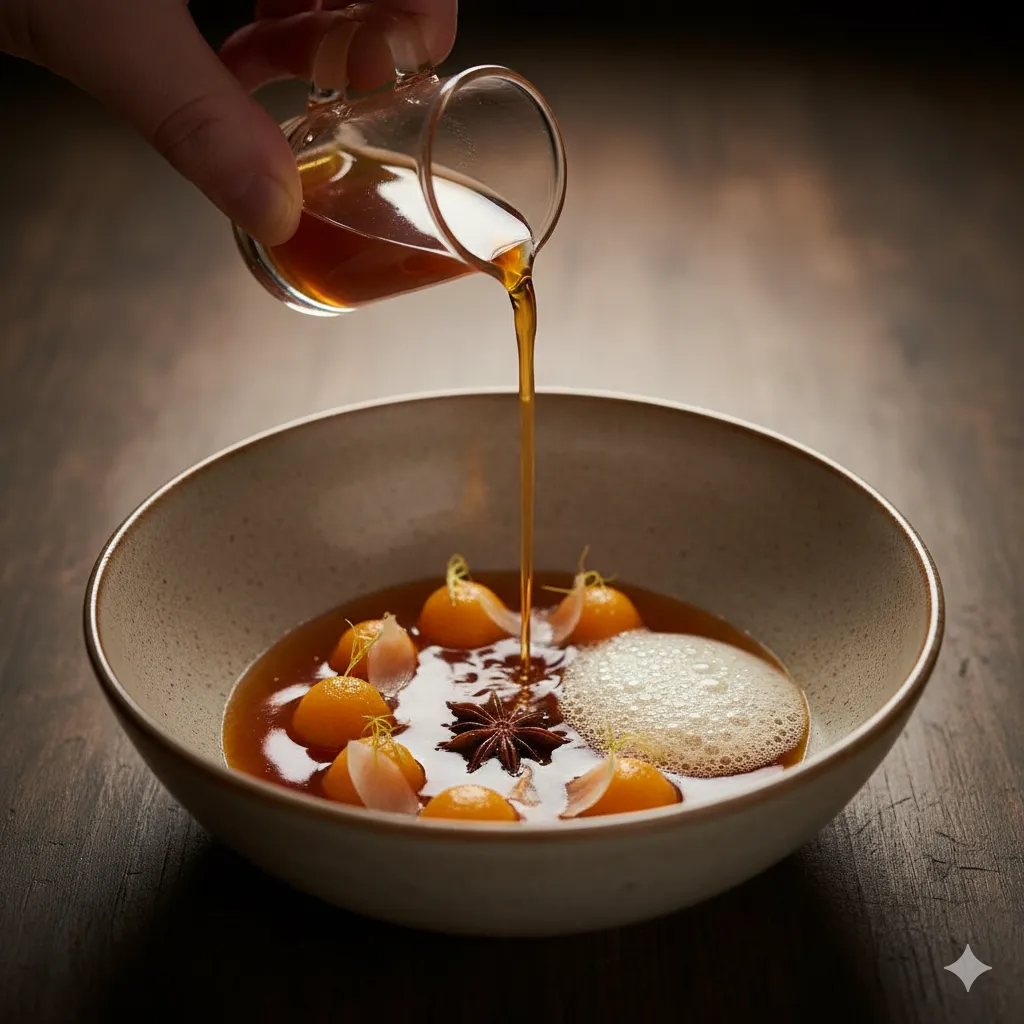
Essence of Pumpkin | Amaretto | Butternut Squash | Fennel
Section titled “Essence of Pumpkin | Amaretto | Butternut Squash | Fennel”This is the pure soul of autumn, captured in a clear, intense essence, refined with sweet and anise-like notes.
Michelin-Star Quality Ingredient List
Section titled “Michelin-Star Quality Ingredient List”- Pumpkin Essence: Hokkaido pumpkin, vegetable stock
- Garnish: Butternut squash, fennel
- Aromas: High-quality amaretto, star anise, white pepper
Detailed Cooking Instructions
Section titled “Detailed Cooking Instructions”-
The Essence (The Heartpiece)
- WHEN: The preparation takes 2 days.
- HOW: Hokkaido pumpkin is roasted to intensify its sweetness, then blended with vegetable stock to a purée. This purée is mixed with egg white and slowly heated to clarify it into a clear, golden consommé (essence).
- WHY: Egg white clarification is a classic haute cuisine technique. The egg white binds all impurities, leaving behind a flawless, intensely flavorful liquid.
-
The Garnish (Precision in Detail)
- HOW: Tiny pearls are scooped from the butternut squash and gently cooked in salted water. The fennel is shaved paper-thin and placed in ice water.
- WHY: The garnishes offer textural contrasts: soft, sweet pumpkin pearls and crisp, anise-flavored fennel. The amaretto is added as a fine foam on the hot essence to release its aroma without overwhelming the soup.
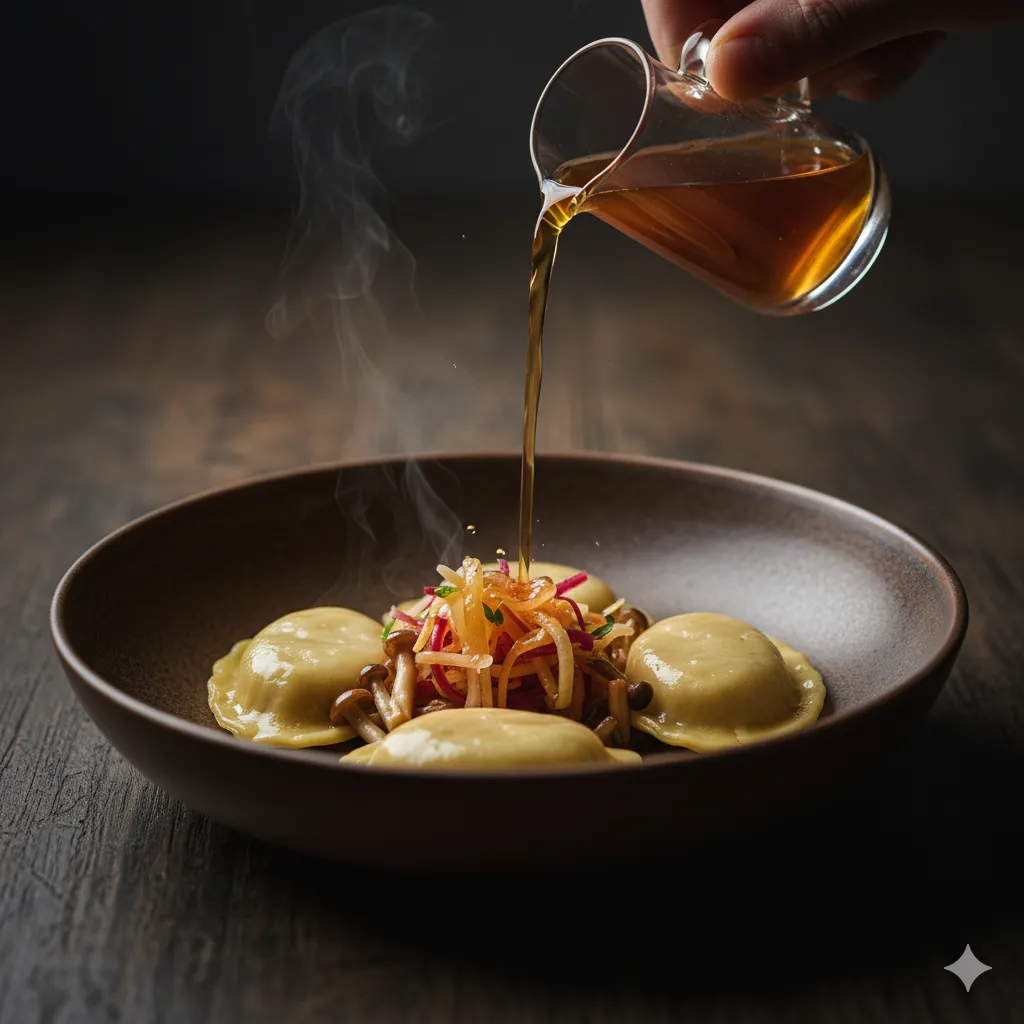
Goose Consommé | Fermented Root Vegetables | Goose Ravioli | Mushrooms
Section titled “Goose Consommé | Fermented Root Vegetables | Goose Ravioli | Mushrooms”A profound, comforting course that combines the umami depth of a classic consommé with the modern, tangy complexity of fermentation.
Michelin-Star Quality Ingredient List
Section titled “Michelin-Star Quality Ingredient List”- Goose Consommé: Roasted goose carcasses, mirepoix, bay leaf, peppercorns, parsley stems
- Goose Ravioli: “Tipo 00” egg yolk dough; filling of goose confit, mushroom duxelles, and a hint of Madeira
- Vegetables & Mushrooms: Lactic-fermented carrots and celeriac; a mix of shimeji and enoki mushrooms
Detailed Cooking Instructions
Section titled “Detailed Cooking Instructions”-
The Goose Consommé (The Soul of the Soup)
- WHEN: A 2-day process for perfect clarity and depth.
- HOW: The goose carcasses are roasted to a deep brown, then gently simmered for 12 hours to make a stock. After degreasing, the stock is slowly heated with a “clarification raft” of egg white and lean minced meat to obtain a crystal-clear consommé.
- WHY: Roasting creates a deep flavor base (Maillard reaction). Clarification is an indispensable high-end kitchen technique that results in a flawless yet intensely aromatic broth.
-
The Garnish (Heart and Freshness)
- WHEN: Fermentation takes weeks; ravioli are made fresh; mushrooms à la minute.
- HOW: The ravioli are handmade and cooked in the broth just before serving. The fermented vegetables are cut into the finest julienne and placed raw in the bowl. The mushrooms are briefly sautéed in butter. The hot consommé is poured over the garnish at the table.
- WHY: Fermentation gives the root vegetables a surprising, lactic tang that cuts through the rich goose broth and adds a modern, complex dimension to the dish. Pouring at the table is a ceremonial act that preserves the freshness and different temperatures of the components.
Fish Dishes
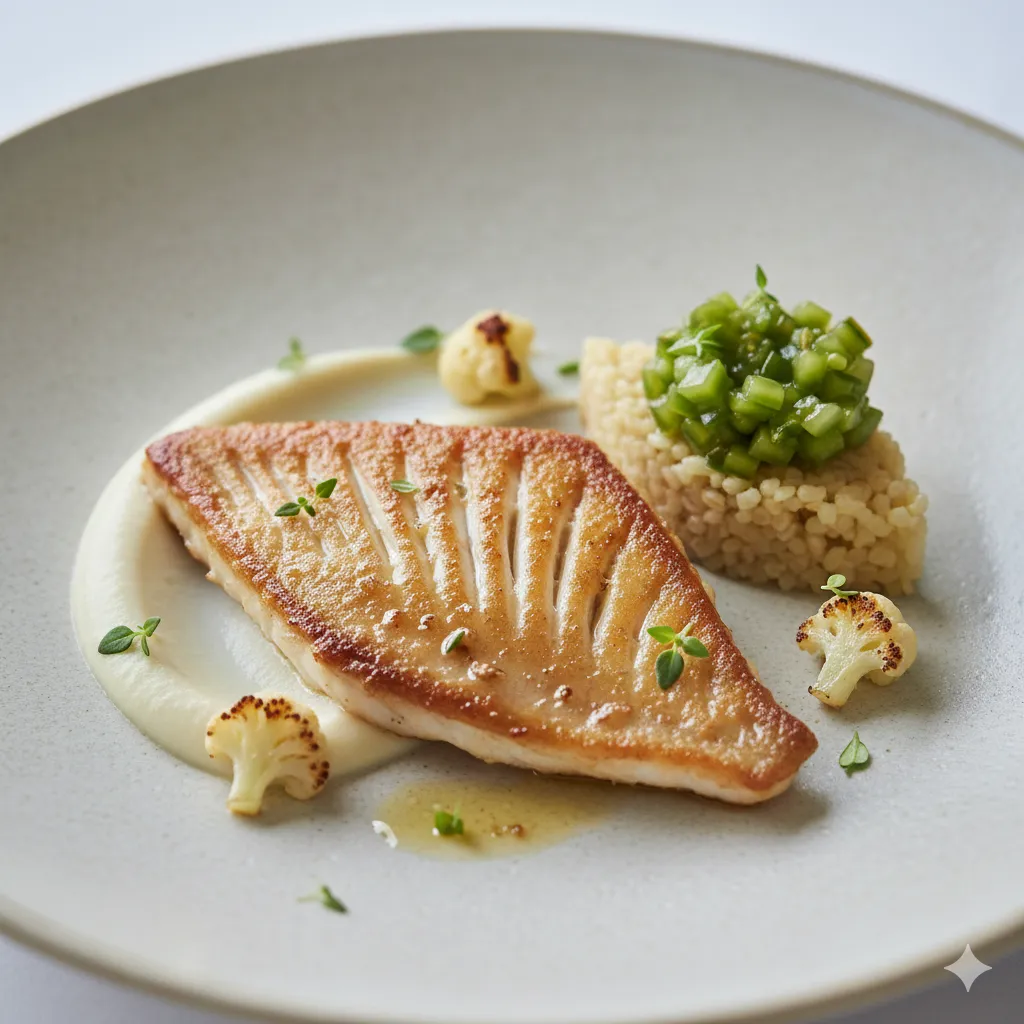
Section titled “Fish Dishes”Skate Wing | Green Zebra | Cauliflower | Bulgur | Jamaican Thyme
Section titled “Skate Wing | Green Zebra | Cauliflower | Bulgur | Jamaican Thyme”An elegant, light dish that combines the nutty sweetness of skate wing with the fresh acidity of rare tomatoes and the earthy aroma of cauliflower.
Michelin-Star Quality Ingredient List
Section titled “Michelin-Star Quality Ingredient List”- Skate Wing: Fresh, of the highest quality
- Cauliflower: 1 head, for purée and florets
- Green Zebra: Ripe Green Zebra tomatoes
- Bulgur: Fine to medium grain
- Aromas: Jamaican thyme (allspice thyme), brown butter (nussbutter)
Detailed Cooking Instructions
Section titled “Detailed Cooking Instructions”- HOW:
- The skate wing is pan-fried in foaming brown butter until golden, keeping its fibrous texture tender.
- The cauliflower is prepared two ways: as a silky purée and as small, tip-roasted florets.
- The Green Zebra tomatoes are diced into a raw, slightly acidic tartare that brings freshness and color.
- The bulgur is cooked in an aromatic broth and served as an elegant quenelle.
- WHY: The Jamaican thyme, with its aroma reminiscent of allspice, gives the dish an unexpected, exotic note that harmonizes wonderfully with the nutty fish and sweet cauliflower. The different textures make the dish exciting.
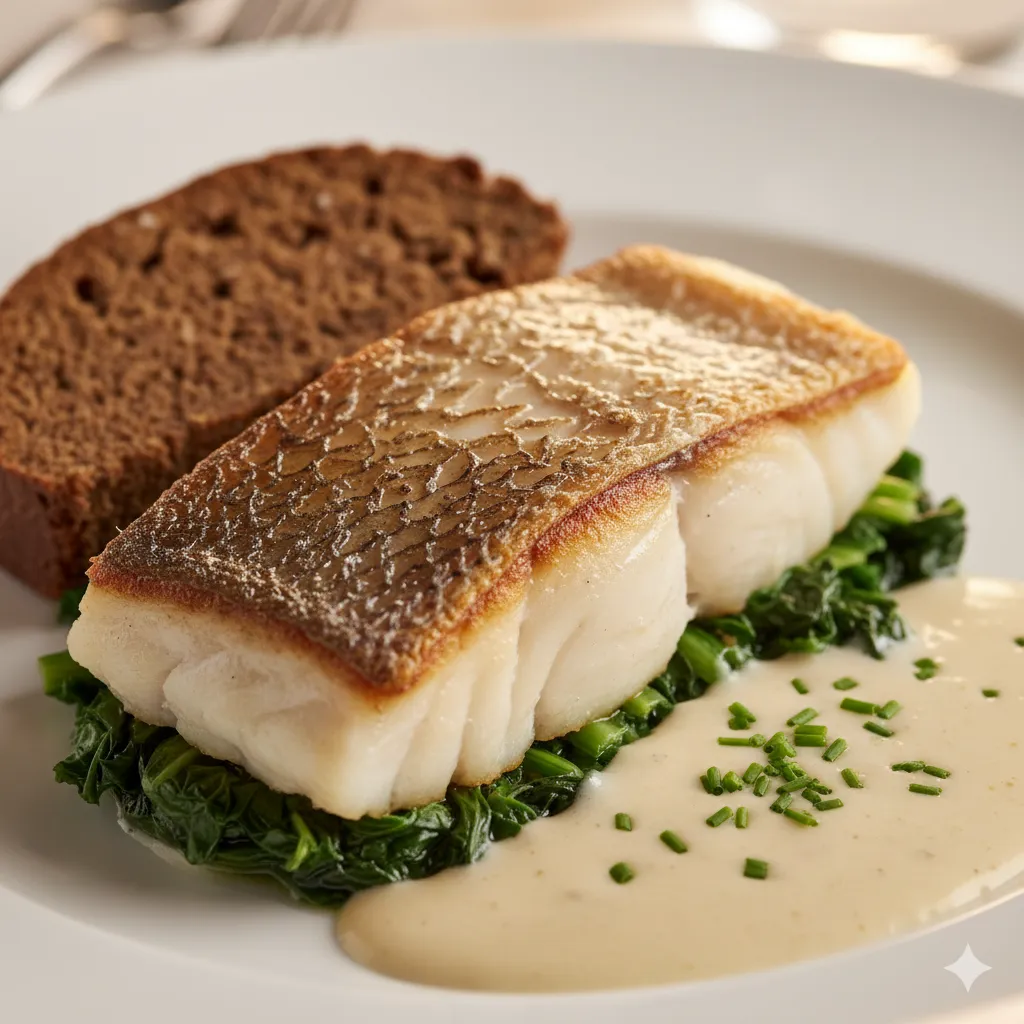
Halibut | Chard | Mushroom Beurre Blanc | Black Bread Dumpling | Chives
Section titled “Halibut | Chard | Mushroom Beurre Blanc | Black Bread Dumpling | Chives”A dish of luxurious elegance. The tender, almost translucent halibut is accompanied by a classic but perfected sauce and a rustic yet refined dumpling.
Michelin-Star Quality Ingredient List
Section titled “Michelin-Star Quality Ingredient List”- Halibut: Center-cut of Icelandic halibut
- Chard: Young chard with colorful stems
- Beurre Blanc: High-quality butter, shallots, dry white wine, mushroom essence
- Black Bread Dumpling: Dark, malty black bread, eggs, milk, parsley
Detailed Cooking Instructions
Section titled “Detailed Cooking Instructions”- HOW:
- Halibut: The fillet is confited at a low temperature in olive oil or pan-fried on the skin side until crisp, so the flesh remains glassy inside.
- Beurre Blanc: The sauce is prepared classically but refined with an intense, homemade mushroom essence.
- Dumpling: The black bread dumpling is prepared traditionally but cooked in a cloth in a perfect cylindrical shape, then sliced and pan-fried in butter.
- Chard: The stems and leaves are cooked separately to respect their different cooking times.
- WHY: The mushroom essence in the beurre blanc gives the classic sauce a deep, earthy umami note. The crispy pan-fried black bread dumpling provides a rustic, textural counterpoint to the delicate, elegant fish.
Vegetarian
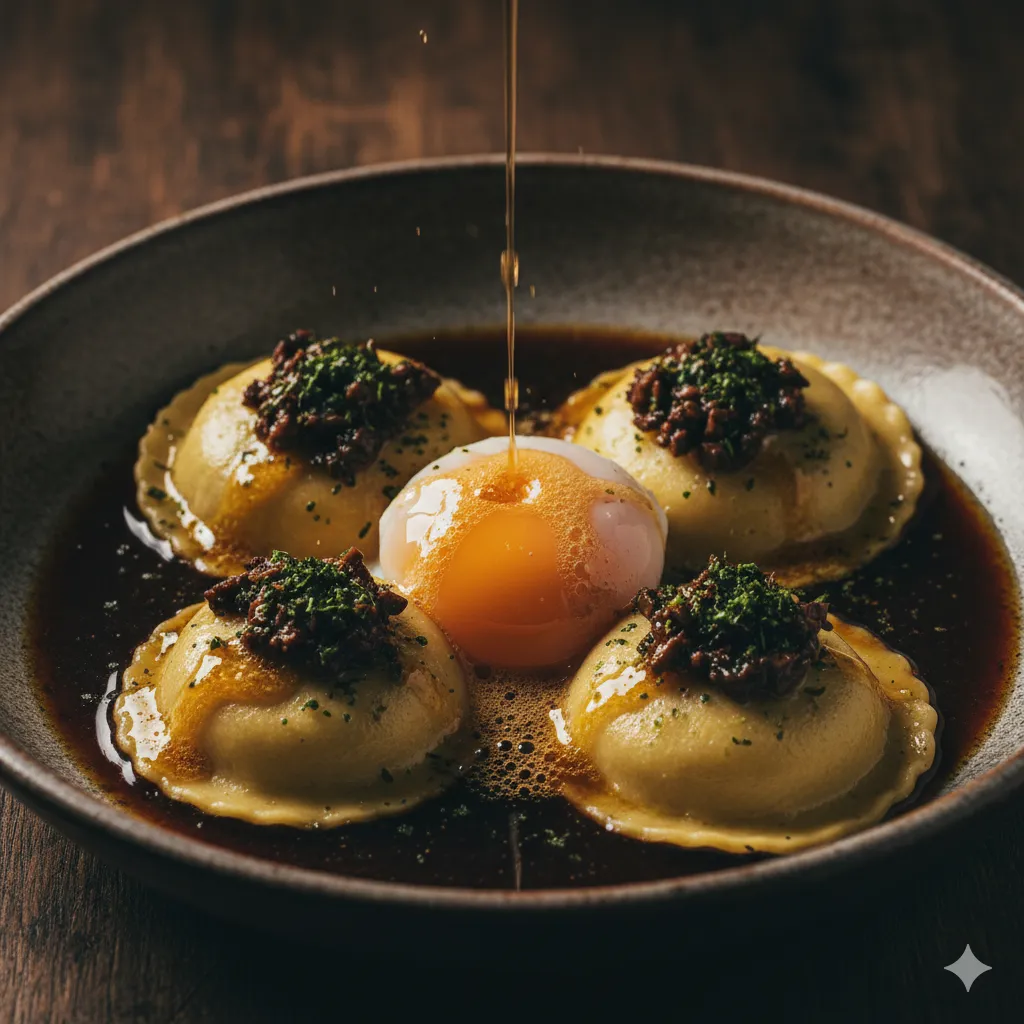
Section titled “Vegetarian”Porcini Ravioli | Poached Egg | Leek | Mushroom Essence | Brown Butter
Section titled “Porcini Ravioli | Poached Egg | Leek | Mushroom Essence | Brown Butter”The forest on a plate. A dish that celebrates pure umami pleasure, with a liquid egg yolk as a rich, natural sauce.
Michelin-Star Quality Ingredient List
Section titled “Michelin-Star Quality Ingredient List”- Ravioli: Homemade egg pasta dough, filling of dried and fresh porcini mushrooms
- Egg: Organic quail or chicken egg
- Leek: Leek, for ash and purée
- Mushroom Essence: Consommé of dried mushrooms
- Brown Butter: High-quality butter
Detailed Cooking Instructions
Section titled “Detailed Cooking Instructions”- HOW:
- Egg: The egg is cooked sous-vide at exactly 63°C to obtain a waxy white and a liquid, creamy yolk.
- Leek: The leek is processed in two ways: the outer green layers are burned to ash, and the inner white parts are made into a fine purée.
- Essence & Butter: The ravioli are served in a clear, intense mushroom essence and drizzled at the table with foamy, hot brown butter.
- WHY: The leek ash provides a surprising, slightly bitter, smoky note. The 63-degree egg is the centerpiece – its liquid yolk mixes with the mushroom essence and brown butter to create an incredibly rich, emulsified sauce.
Main Courses (Meat)
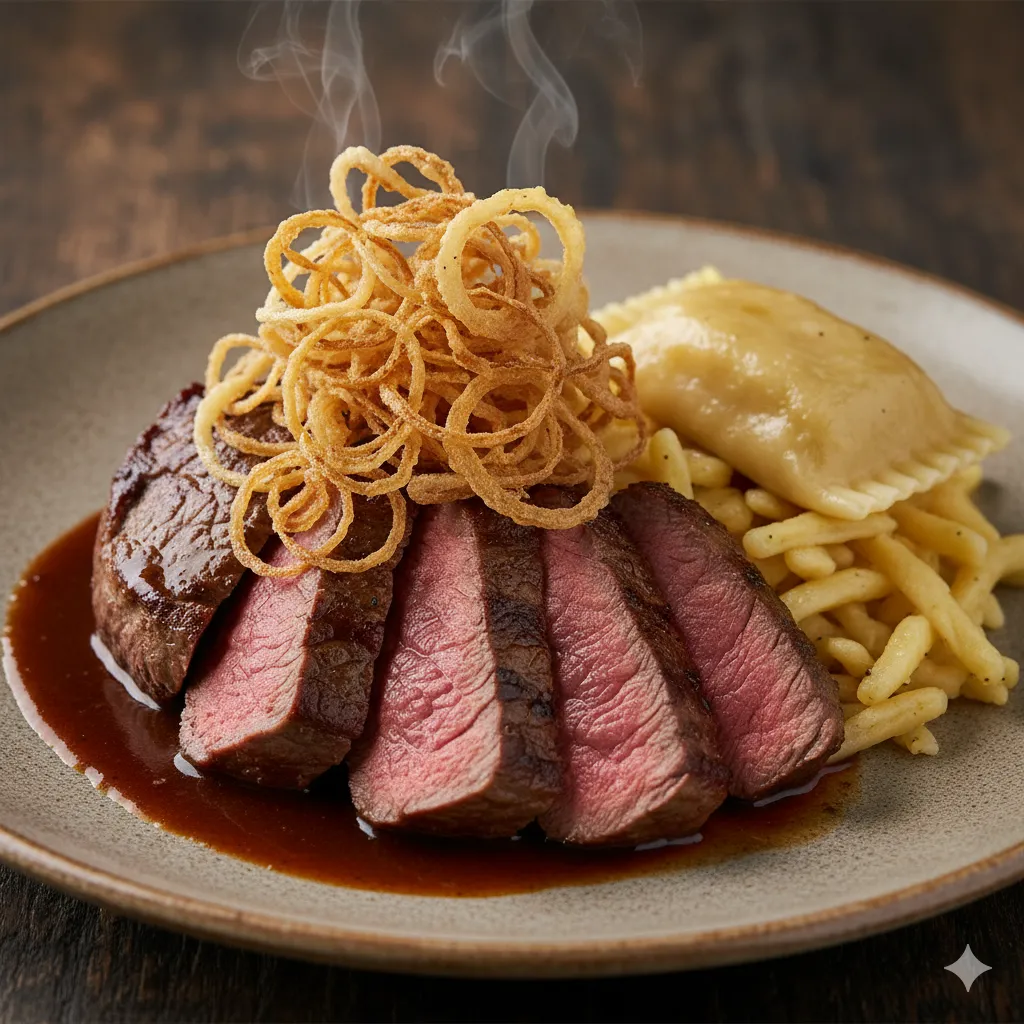
Section titled “Main Courses (Meat)”Swabian-Style Roast Beef | Two Kinds of Onions | Lemberger Sauce | Maultaschen | Hand-Scraped Spätzle
Section titled “Swabian-Style Roast Beef | Two Kinds of Onions | Lemberger Sauce | Maultaschen | Hand-Scraped Spätzle”This is not a dish; it is the Swabian soul on a plate. It is a testament to the fact that regional cuisine, when executed with absolute devotion, is the highest form of culinary art.
Michelin-Star Quality Ingredient List
Section titled “Michelin-Star Quality Ingredient List”- For the Roast Beef: 1 thick-cut (4 cm) steak from an aged beef rump cap (dry-aged for 28 days)
- For the Sauce & Onions: Homemade veal stock, Lemberger red wine, 2 yellow onions
- For the Maultaschen: “Tipo 00” flour, eggs, minced veal and pork, bacon, bread, parsley, nutmeg, mace
- For the Spätzle: Flour (Type 405), egg yolks only, sparkling mineral water, nutmeg
Detailed Cooking Instructions
Section titled “Detailed Cooking Instructions”- The Maultaschen & Spätzle (The Soul of Swabia): The Maultaschen filling is traditionally hand-mixed. The Spätzle are hand-scraped from a board using a pure egg yolk dough. This is not technique; it is devotion to tradition.
- The Lemberger Sauce & Two Kinds of Onions (Layers of Flavor): One onion is caramelized for an hour into a sweet jam that forms the base of the Lemberger reduction sauce. The other is sliced paper-thin and fried until crispy.
- The Roast Beef (The Final Act): The aged steak is seared in beef tallow, basted with aromatic butter, and must rest for 10 minutes before being sliced.
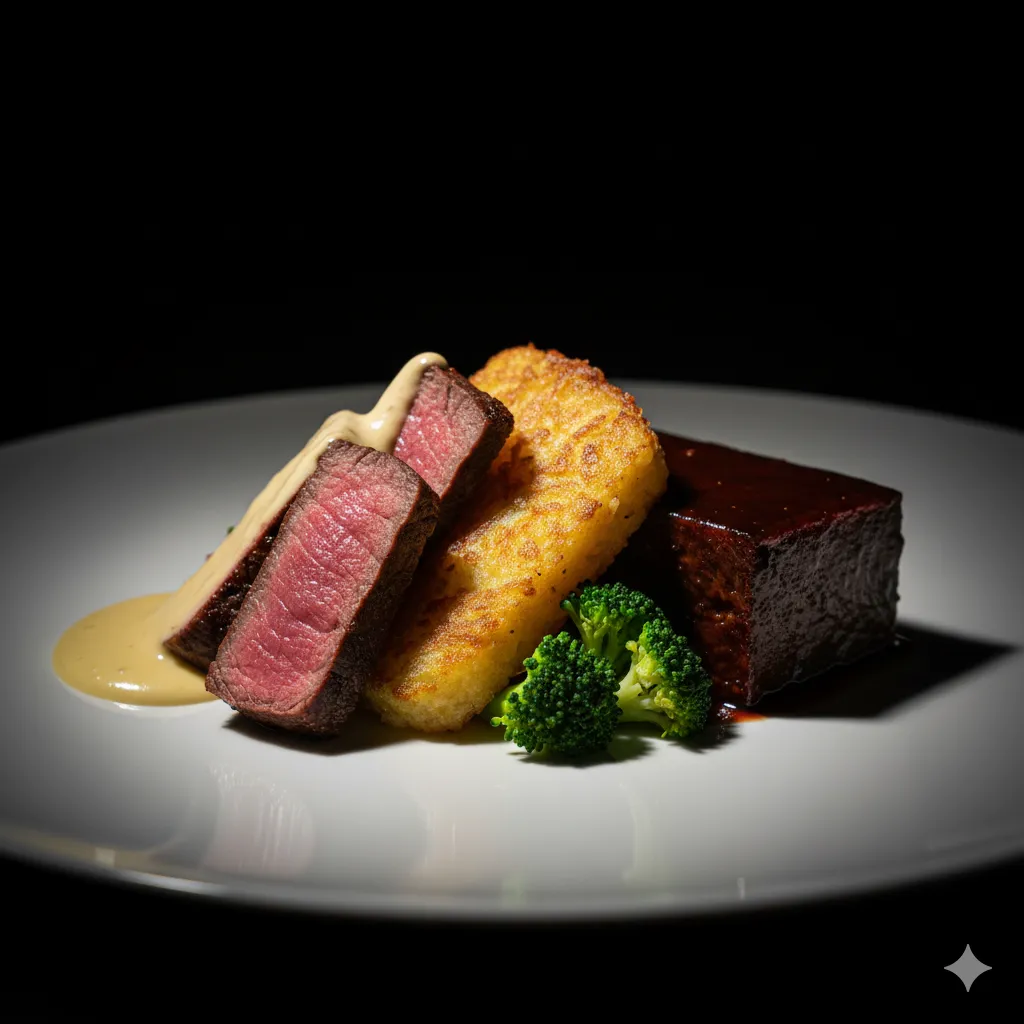
Beef Tenderloin | Short Rib | “Dipped” Broccoli | Hollandaise Sauce | Rösti
Section titled “Beef Tenderloin | Short Rib | “Dipped” Broccoli | Hollandaise Sauce | Rösti”A dialogue between rustic tradition and modern precision – the deep comfort of slow-braised meat and crisp potato, elevated by the technical perfection of a classic French sauce and an innovative vegetable preparation.
Michelin-Star Quality Ingredient List
Section titled “Michelin-Star Quality Ingredient List”- For the Beef: 1 center-cut beef tenderloin (aged 21 days), 1 bone-in short rib
- For the “Dipped” Broccoli: Perfect, small broccoli florets, herb emulsion (parsley, chervil, grapeseed oil, xanthan), finely ground toasted hazelnuts
- For the Hollandaise Sauce: Fresh egg yolks, clarified butter, white wine vinegar reduction, lemon juice, cayenne
- For the Rösti: Waxy potatoes, clarified butter, salt, white pepper, nutmeg
Detailed Cooking Instructions
Section titled “Detailed Cooking Instructions”- The “Dipped” Broccoli (The Dip is a Multi-Layered Technique): The blanched florets are dipped in an herb emulsion and then rolled in toasted hazelnut powder. This creates a dry, nutty crust without frying.
- The Other Components: The short rib is braised for 48 hours and pressed. The Rösti is fried to a crisp from pre-cooked potatoes. The hollandaise is whipped up à la minute. The tenderloin is seared and basted with butter.
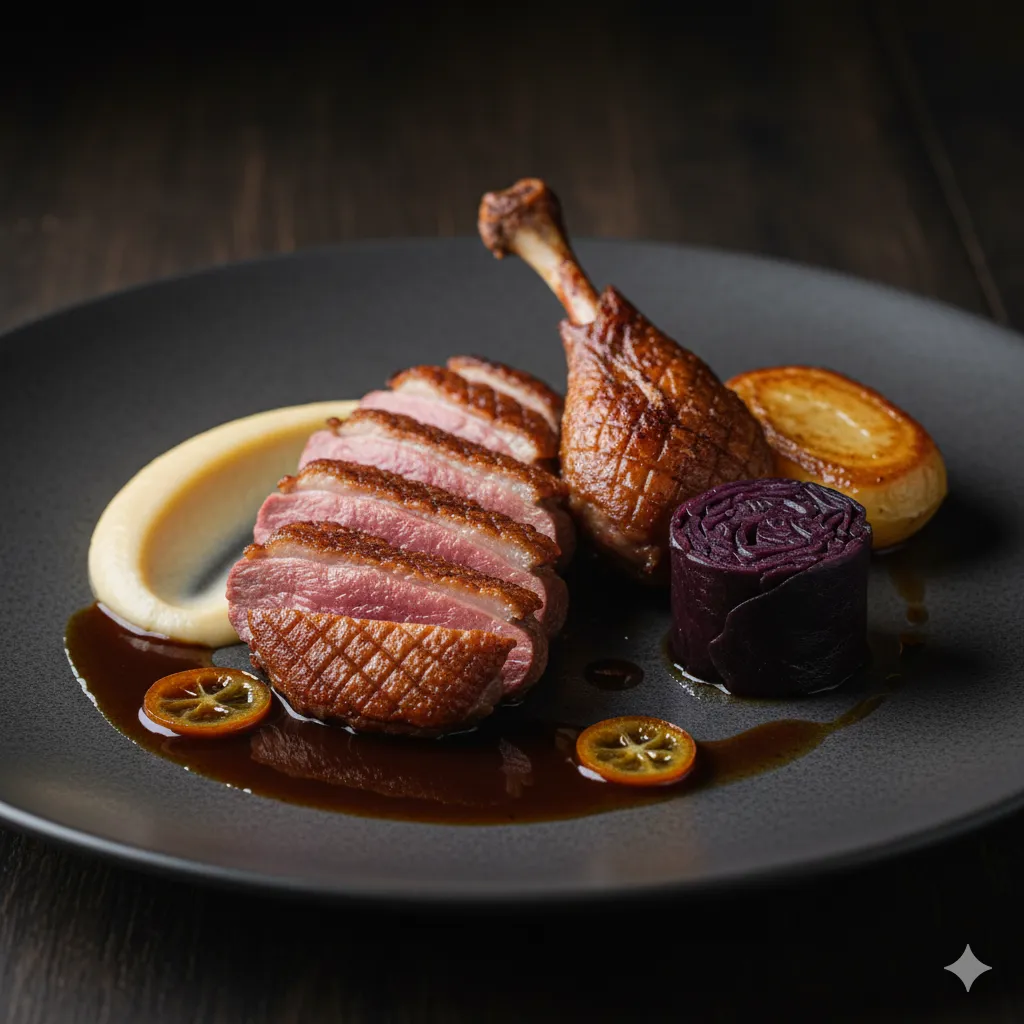
Duck Breast and Leg | Jerusalem Artichoke | Red Cabbage Rolls | Kumquat | Potato
Section titled “Duck Breast and Leg | Jerusalem Artichoke | Red Cabbage Rolls | Kumquat | Potato”A masterful utilization of one animal (“nose to tail”), balancing the rich, fatty duck with earthy, sweet-sour, and bitter-citrus notes.
Michelin-Star Quality Ingredient List
Section titled “Michelin-Star Quality Ingredient List”- For the Duck: 1 Label Rouge duck (legs, breasts), duck fat, juniper berries, thyme
- For the Jerusalem Artichoke Purée: Jerusalem artichokes, milk, butter, white pepper
- For the Red Cabbage Rolls: Red cabbage, Granny Smith apple, red wine, vinegar, star anise, cinnamon
- For the “Potato”: Likely a fondant potato, cooked in duck fat and broth
- For the Jus: Duck carcass, kumquats, honey, sherry vinegar
Detailed Cooking Instructions
Section titled “Detailed Cooking Instructions”- The Duck (Two Textures): The leg is confited over 3 days (cured, slow-cooked in duck fat, crisped). The breast is slowly rendered skin-side down in a cold pan to achieve a perfect, crispy skin while the meat stays pink.
- The Accompaniments (Harmony of Flavors): The Jerusalem artichoke purée is passed through a sieve for a silky texture. The red cabbage is traditionally braised sweet-sour and formed into elegant rolls. The intense duck jus is balanced with the bitter-sweet note of poached kumquats.
Desserts & Cheeses
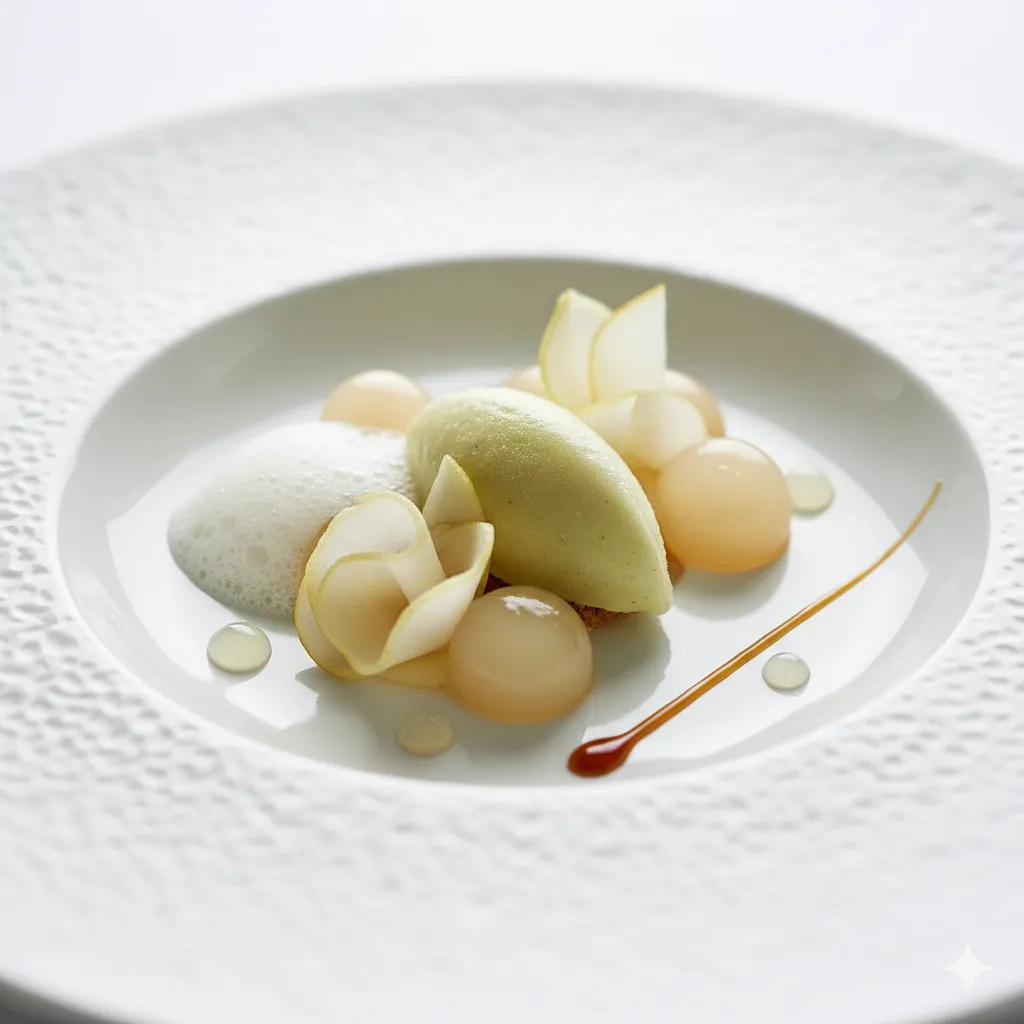
Section titled “Desserts & Cheeses”Pear | Lychee | White Tea | Salted Caramel
Section titled “Pear | Lychee | White Tea | Salted Caramel”A dessert of ethereal lightness and complex aromatics. It balances floral, fruity, and astringent notes with a hint of salty depth.
Michelin-Star Quality Ingredient List
Section titled “Michelin-Star Quality Ingredient List”- Pear: Firm, aromatic pears (e.g., Williams Christ)
- White Tea: High-quality Silver Needle or Pai Mu Tan
- Lychee: Fresh lychees
- Salted Caramel: Cream, butter, sugar, fleur de sel
Detailed Cooking Instructions
Section titled “Detailed Cooking Instructions”- Pear Three Ways: As a refreshing sorbet, as spheres poached in white tea, and as paper-thin, raw carpaccio slices.
- White Tea: Serves as an infusion for the sorbet and poaching liquid, and possibly as a delicate foam.
- Lychee: Is processed fresh and as a fluid gel.
- Salted Caramel: Is cooked into a fluid yet intense sauce.
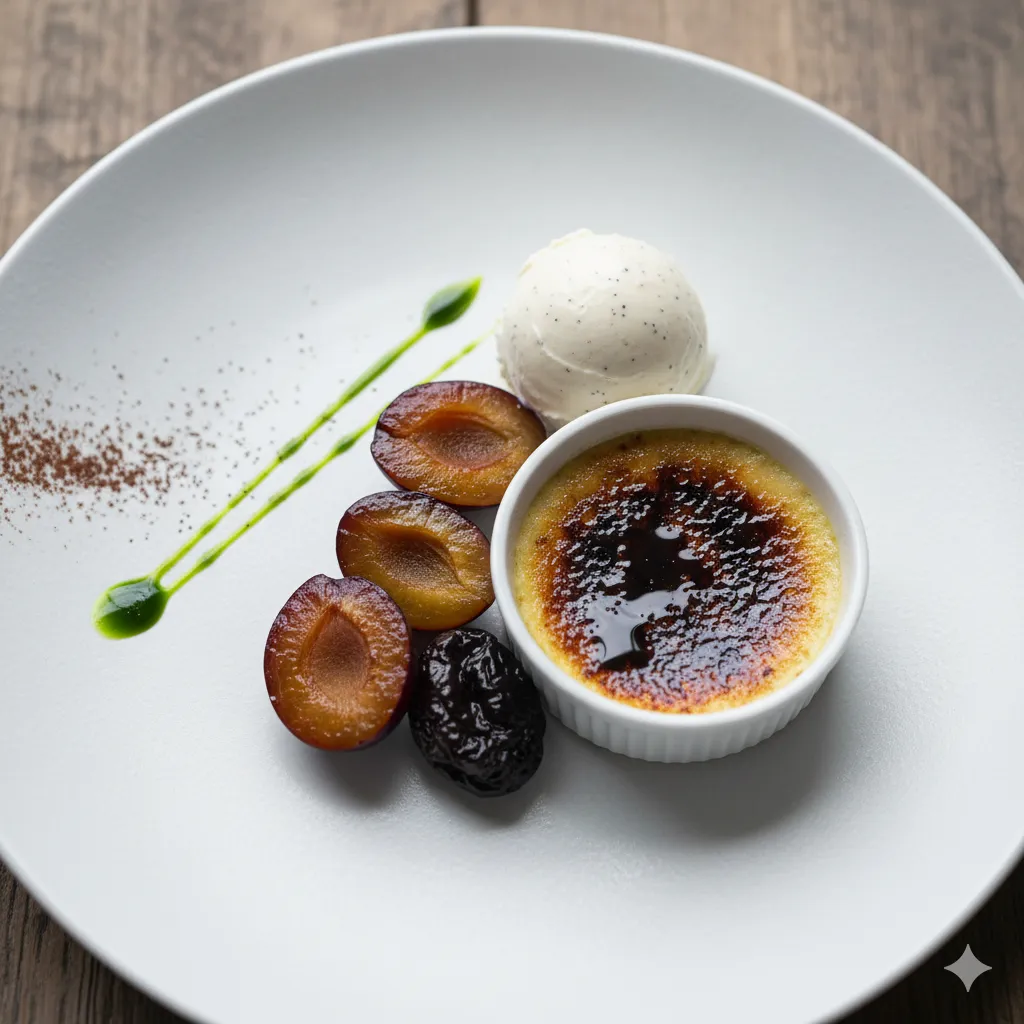
Plum | Vanilla Ice Cream | Pumpkin Seed Oil | Burnt Crème | Prune | Cocoa
Section titled “Plum | Vanilla Ice Cream | Pumpkin Seed Oil | Burnt Crème | Prune | Cocoa”A dessert of profound complexity that bridges sweet, fruity, earthy, and bitter notes.
Michelin-Star Quality Ingredient List
Section titled “Michelin-Star Quality Ingredient List”- For the Burnt Crème: A2 cream, 1 Grade-A Bourbon vanilla bean, fresh egg yolks, fine sugar, Demerara sugar
- For the Plum Elements: Ripe Damson plums, high-quality prunes, poaching syrup (water, sugar, star anise, cinnamon stick), aged Armagnac
- For Plating: Homemade vanilla ice cream, cold-pressed Styrian pumpkin seed oil (PGI), Valrhona cocoa powder, fleur de sel
Detailed Cooking Instructions
Section titled “Detailed Cooking Instructions”- The Burnt Crème (Charred for Complexity)
- WHEN: The custard must chill for 12 hours. The torching is the absolute final step.
- HOW: The custard is gently baked in a bain-marie. For the crust, Demerara sugar is torched to a deep, almost black caramel to create a deliberate, intentional bitterness.
- WHY: This ‘burnt’ quality is not a mistake, but a signature. In Swabian patisserie, ‘burnt’ implies a hint of smoke and astringent depth. It is a counterpoint that elevates the sweetness of the plum and vanilla into something profound and unforgettable.
- The Plum & Prune Elements (The Soul of the Fruit)
- WHEN: Prepared days in advance to allow flavors to mature.
- HOW: Fresh plums are poached in a spiced syrup. Prunes are rehydrated in warm Armagnac until plump.
- WHY: Poaching infuses the fruit with aromas, while rehydrating in alcohol adds a layer of aged complexity.
- The Final Composition (The Symphony of Contrasts)
- WHEN: Assembled in under 30 seconds.
- HOW: The hot, freshly burnt crème is placed on the plate. The cold ice cream is placed opposite. Warm plums and prunes are arranged. A drizzle of savory pumpkin seed oil is added. A dusting of bitter cocoa is sprinkled. The final touch: two or three grains of fleur de sel on the warm plum to make its flavor explode.
- WHY: Every element is a calculated contrast. The salt is a neurological catalyst, intensifying the perception of sweetness in the fruit and creating a final, unforgettable sensory peak.
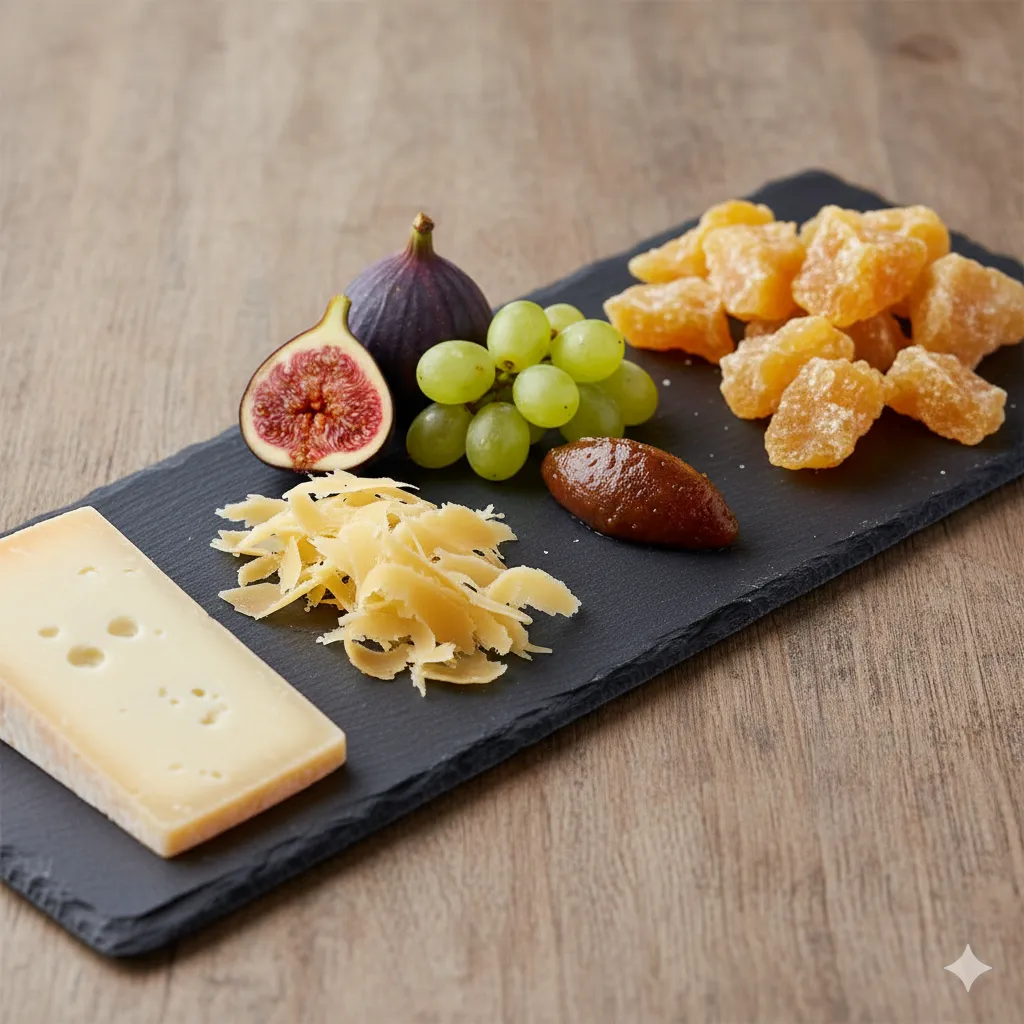
Variation of Comté| Fig | Grapes
Section titled “Variation of Comté| Fig | Grapes”A tribute to a single, exceptional product. This dish is not a simple cheese plate, but a curated journey through the maturations and terroir of Comté.
Michelin-Star Quality Ingredient List
Section titled “Michelin-Star Quality Ingredient List”- Comté: Three different maturations: 12 months (fruity-mild), 24 months (nutty-complex), 36 months (crystalline-intense)
- Fig: Fresh, ripe figs and a homemade fig chutney
- Grapes: Seedless, sweet grapes
- Accompaniment: Paper-thin, crispy nut bread or fruit bread
Detailed Cooking Instructions
Section titled “Detailed Cooking Instructions”- HOW: The cheese is served at perfect temperature. Each maturation is presented differently: the young as a simple slice, the medium as fine shavings, the old as a broken chunk to show its crystal structure.
- WHY: The “Variation” is a didactic experience. It allows the guest to consciously trace the development of flavors in the cheese – from milky-sweet to salty-crystalline and umami-rich.