

Fragrances – The Invisible Signature of Your Style, Curated by Style & Taste
A fragrance is poetry for the senses, an invisible aura that announces your presence and leaves a lasting impression. It is the most subtle yet powerful form of personal expression, capable of shaping moods, evoking memories, and revealing the essence of your personality. At Style & Taste, we invite you to immerse yourself in the sensual and multifaceted world of perfumes—a journey to discover your olfactory signature.
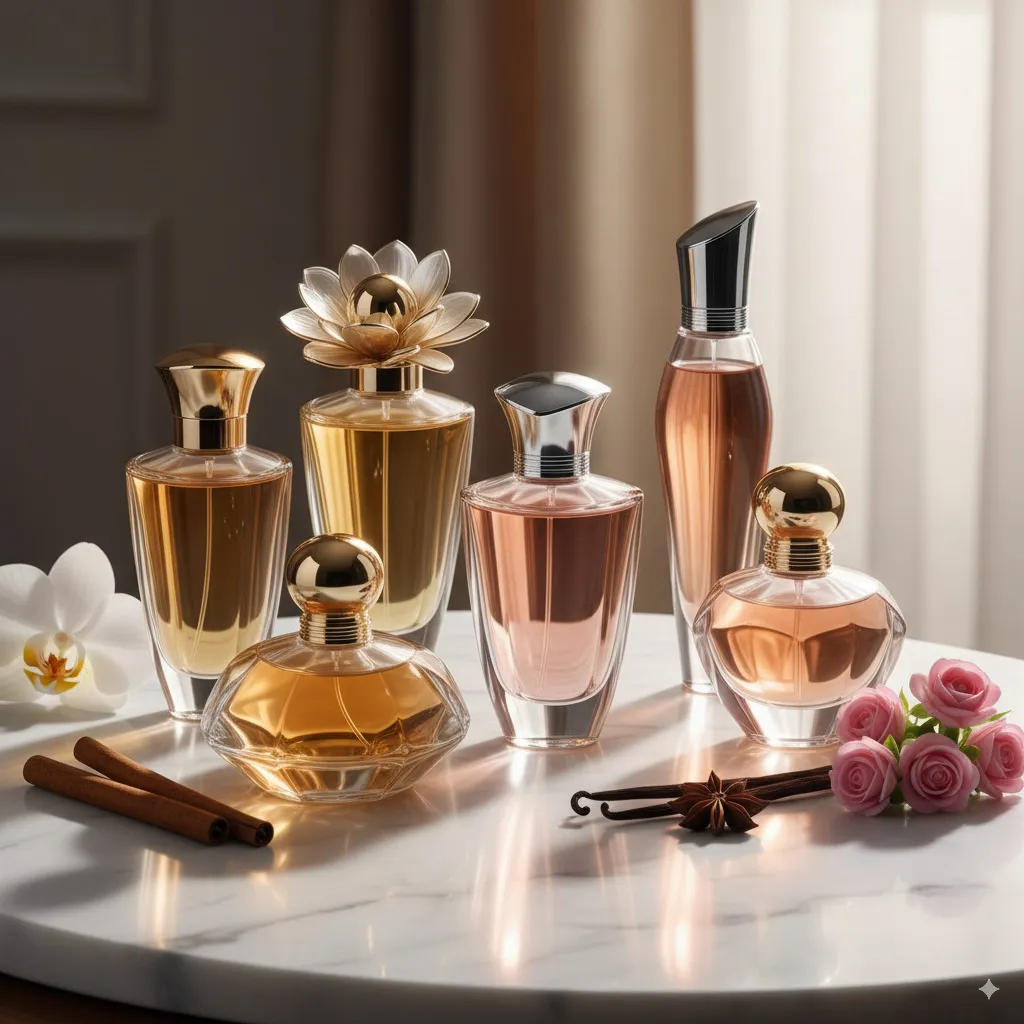
A carefully chosen perfume is more than an accessory—it is an invisible garment that completes your style and reflects your soul.
The Magic of Fragrance: Why Perfumes Enchant and Define Us
Section titled “The Magic of Fragrance: Why Perfumes Enchant and Define Us”Olfactory perception is uniquely linked to our limbic system—the center for emotions, memories, and instincts. A fragrance often bypasses rational thought and speaks directly to our innermost being. A masterfully composed perfume can:
- Boost your self-confidence and lend you an aura of assurance and charisma.
- Subtly accentuate or boldly highlight facets of your personality—whether sensual, energetic, elegant, mysterious, or minimalist.
- Serve as an anchor for precious memories associated with specific moments, places, or people.
- Positively influence your mood, calm, invigorate, or inspire.
- Lend an unforgettable, individual note to your entire presence that lingers long after.
- Create a deep sense of well-being and luxury in everyday life—a small, daily ritual of self-care.
The Universe of Scents: A Curated Guide by Style & Taste
Section titled “The Universe of Scents: A Curated Guide by Style & Taste”The world of perfumes is rich and complex. To find the fragrance that truly speaks to you, a basic understanding of its composition and classification is helpful.
Fragrance Families – Discovering Olfactory Landscapes
Section titled “Fragrance Families – Discovering Olfactory Landscapes”Perfumes are traditionally categorized into overarching fragrance families, each possessing a distinct character and specific emotional impact.
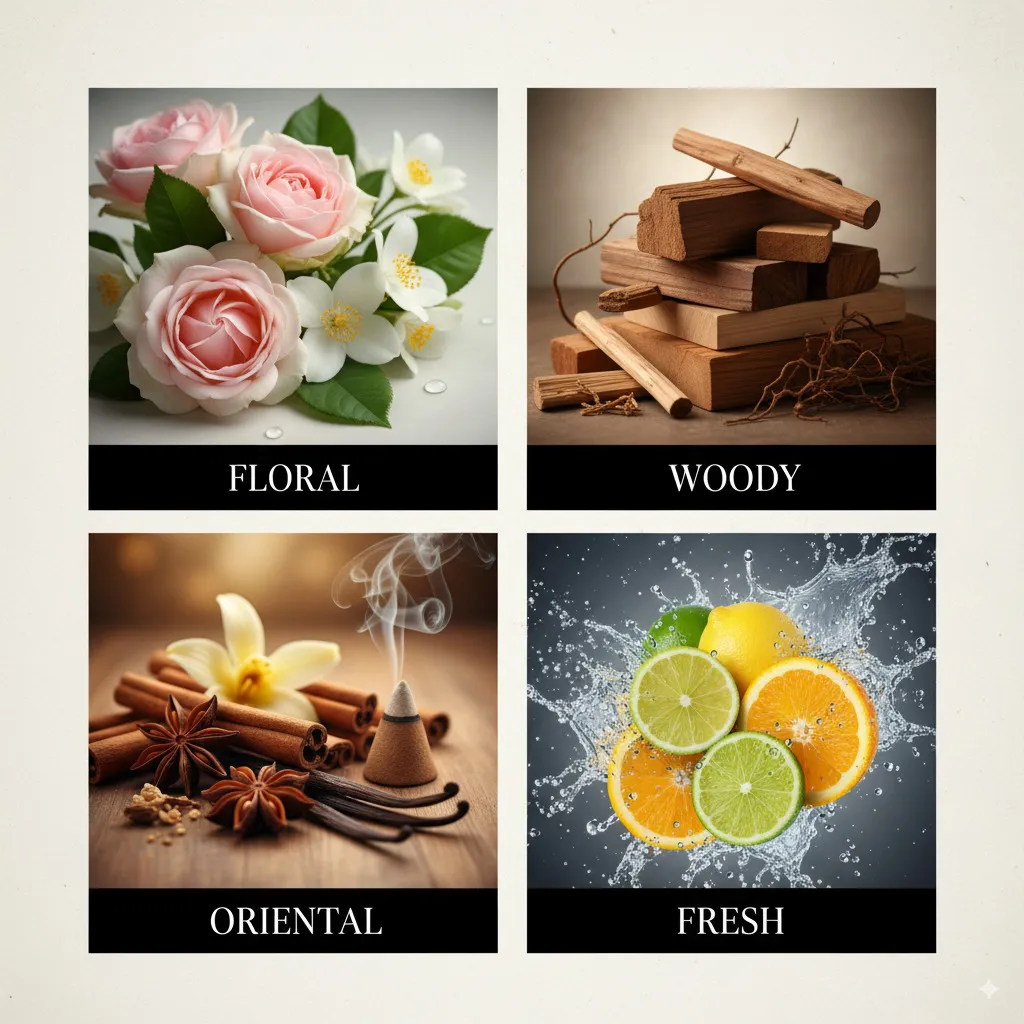
From the delicacy of a flower to the depth of noble woods—each fragrance family tells its own story.
- Floral: The most extensive and perhaps most feminine family. Ranges from soliflore scents (focusing on a single flower like rose, jasmine, tuberose, or lily of the valley) to complex bouquets. Associations: romance, elegance, tenderness, freshness.
- Oriental (Amber/Spicy): Sensual, opulent, and often mysterious. Characterized by warm notes like vanilla, amber, tonka bean, incense, myrrh, patchouli, and exotic spices (cinnamon, clove, cardamom). Associations: warmth, seduction, exoticism, luxury.
- Woody: Characterized by notes of woods such as sandalwood (creamy, soft), cedarwood (dry, spicy), vetiver (earthy, smoky), or oud (complex, animalic). Associations: elegance, grounding, warmth, sophistication. Often unisex or used as a base in many fragrance compositions.
- Fresh / Citrus (Hesperidic/Aquatic/Green): Invigorating, sparkling, and clean. Dominant notes of citrus fruits (bergamot, lemon, mandarin, grapefruit), aquatic accords (sea breeze, salt), or green notes (freshly cut grass, leaves, galbanum). Associations: energy, cleanliness, lightness, vitality.
- Fougère (Aromatic): A classic, often considered masculine fragrance structure, based on an accord of lavender (top), oakmoss (heart), and coumarin (base). Herbaceous, fresh, often with mossy and woody undertones.
- Chypre: A sophisticated family, often described as elegant and complex. Characterized by a contrast between a fresh citrus top note (usually bergamot) and a deep, warm base of oakmoss, patchouli, and often labdanum.
The Fragrance Pyramid – The Unfolding of a Masterpiece on Your Skin
Section titled “The Fragrance Pyramid – The Unfolding of a Masterpiece on Your Skin”A perfume is a living composition that develops on the skin in different phases over time. This olfactory journey is often visualized as a fragrance pyramid:
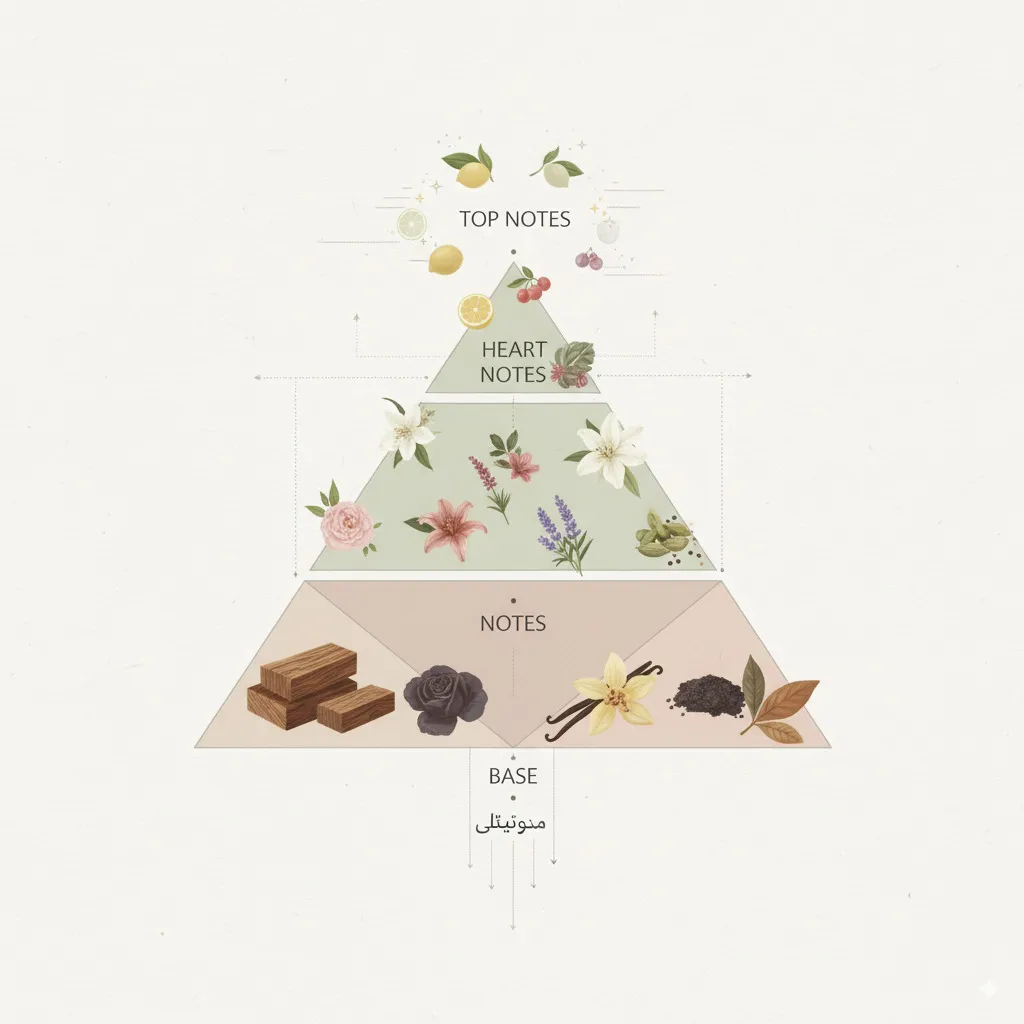
A perfume is a symphony that unfolds note by note, telling its story on your skin.
- Top Notes: The first, often sparkling and fleeting impression perceived immediately after spraying. Usually consists of light molecules like citrus notes, fresh herbs, or aquatic accords. This phase typically evaporates within 5-15 minutes.
- Middle/Heart Notes: The core of the perfume, revealing its true character and personality once the top notes have dissipated. Often consists of floral, fruity, spicy, or green notes. The heart notes are present for several hours (usually 2-4 hours).
- Base Notes: The foundation of the fragrance, giving it depth, warmth, and longevity. Consists of heavy, long-lasting molecules like musk, amber, vanilla, precious woods, balsams, or mosses. The base notes can linger on the skin and clothing for many hours, sometimes even days.
The Essence of Intensity: From Eau de Cologne to Extrait de Parfum
Section titled “The Essence of Intensity: From Eau de Cologne to Extrait de Parfum”The designation of a fragrance indicates the concentration of pure fragrance oils in the alcoholic solution, which significantly influences its intensity and longevity:
- Eau de Cologne (EdC): Approx. 2-5% fragrance oil content. Extremely light, refreshing, and invigorating. Ideal for a quick refresh, especially in summer. Longevity: approx. 1-2 hours.
- Eau de Toilette (EdT): Approx. 5-15% fragrance oil content. A light to medium-strength fragrance, perfect for daily use and the office. Longevity: approx. 3-5 hours.
- Eau de Parfum (EdP): Approx. 15-20% fragrance oil content. Significantly more intense and long-lasting, often with a more complex scent development. Ideal for the evening or when a stronger presence is desired. Longevity: approx. 5-8 hours.
- Parfum / Extrait de Parfum: Approx. 20-40% fragrance oil content (or even higher). The purest and most concentrated form, extremely intense, rich, and very long-lasting. A few drops are sufficient. Longevity: often over 8 hours, sometimes up to 24 hours.
The Art of Choosing a Fragrance: How to Find Your Olfactory Signature
Section titled “The Art of Choosing a Fragrance: How to Find Your Olfactory Signature”Choosing a perfume is a deeply personal decision, a dialogue between the fragrance and your skin. Take your time on this journey of discovery.
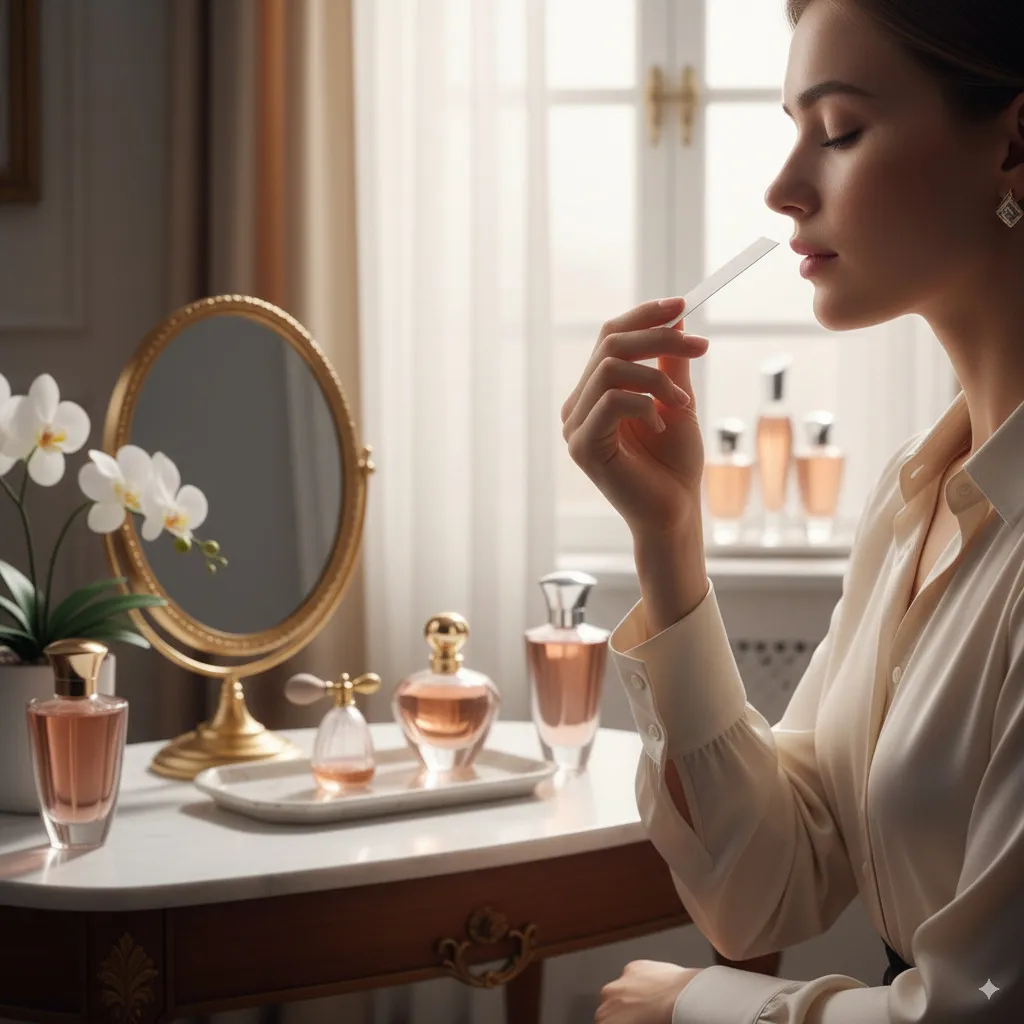
The true character of a fragrance is only revealed through its intimate interaction with your skin.
- Always Test on Skin: Your skin’s unique chemistry (pH level, oil content) significantly influences how a perfume unfolds. A fragrance can smell different on different people. Spray the fragrance on a warm, untreated skin area (ideally the inside of your wrist) and avoid rubbing the spot.
- Give the Fragrance Time to Develop: Don’t judge a perfume solely by its first impression (top notes). Experience how the heart notes develop after about 10-30 minutes and how the base notes linger on your skin after a few hours.
- Limit Your Selection per Test Session: Your nose can quickly become overwhelmed. Do not test more than 3-4 different fragrances at a time. Neutralize your sense of smell in between by smelling unperfumed skin or briefly stepping into fresh air (coffee beans are an often-cited but not always helpful myth).
- Consider Occasion & Season: A light, citrusy fragrance might be perfect for a summer day, while an opulent, oriental fragrance is better suited for an elegant evening event or the cooler season.
- Trust Your Intuition & Emotion: Which fragrance appeals to you? Which evokes positive feelings, enhances your mood, or brings pleasant associations to mind? The emotional connection is often decisive.
- Seek Advice, but Decide for Yourself: Expert advice can be helpful, but the final choice should always be your own, based on your personal perception.
The Ritual of Application: How Your Perfume Unfolds Its Full Magic
Section titled “The Ritual of Application: How Your Perfume Unfolds Its Full Magic”The correct application technique ensures that your favorite fragrance is optimally showcased and maintains its presence for hours.
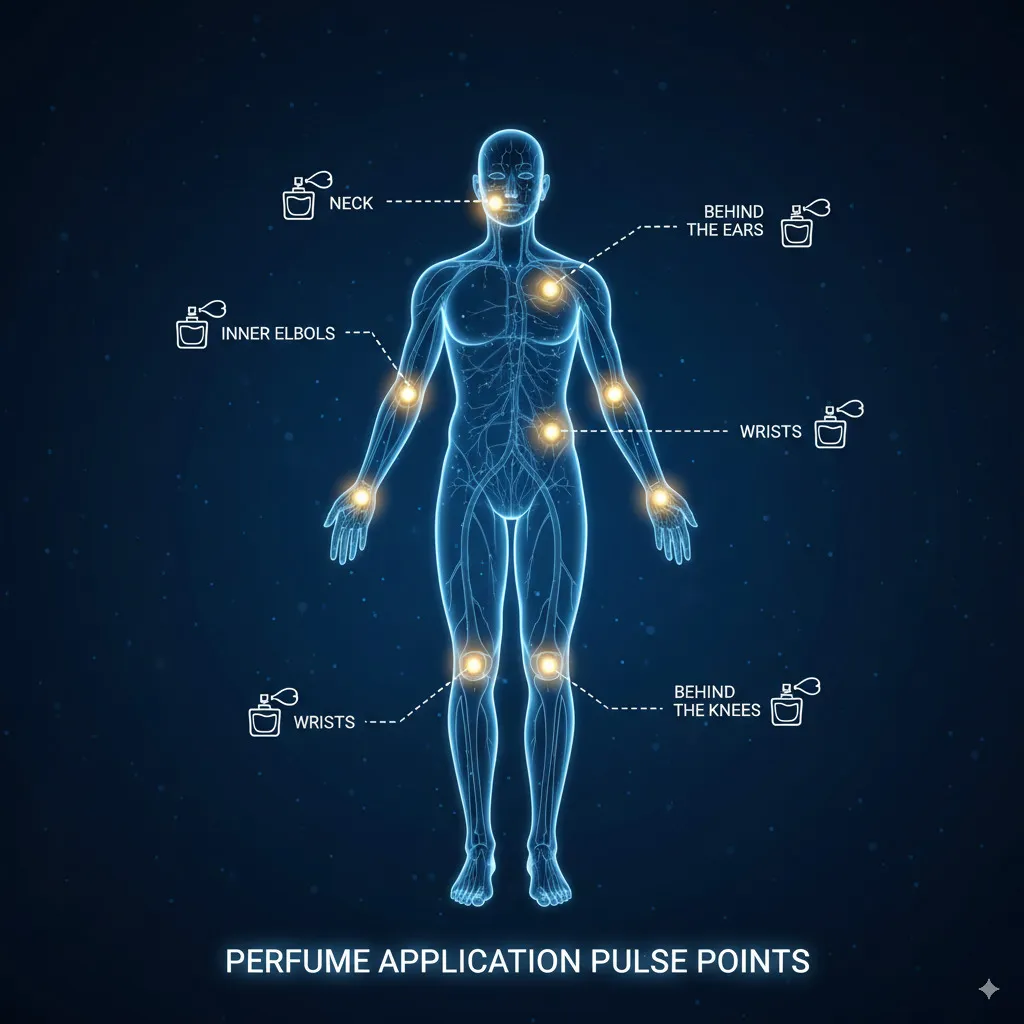
Apply your fragrance where your pulse beats—the warmth of your skin intensifies the olfactory development.
- The Art of Pulse Points: Spray the perfume on warm skin areas where the pulse is palpable: the insides of the wrists, the sides of the neck, behind the earlobes, in the crooks of the elbows, and behind the knees. The body heat in these areas helps to gradually release and intensify the fragrance.
- Avoid Rubbing: The common practice of rubbing the wrists together after spraying can destroy the delicate fragrance molecules and alter the intended composition of the top notes. Simply let the perfume air dry or, at most, gently dab it.
- Apply to Cared-for, Hydrated Skin: Perfume tends to last longer on well-moisturized skin. Apply an unscented, moisturizing body lotion to the respective areas before applying perfume.
- Fragrance in Hair & on Clothing (with caution): A light spritz from a distance into the hair or onto a scarf can prolong the fragrance’s longevity. However, be careful with light-colored or delicate fabrics, as some perfumes can cause stains. Test this on an inconspicuous area first.
- Less is Often More – The Art of Dosage: Start subtly, especially with more concentrated Eau de Parfums or Extraits de Parfum. You can always reapply if needed. The goal is a subtle aura, not an overpowering cloud of fragrance.
Discovering your signature scent is an intimate journey of the senses. We at Style & Taste invite you to explore this world with curiosity and joy, and to find those olfactory compositions that uniquely express your personality and enrich every moment with an invisible note of elegance and magic.